

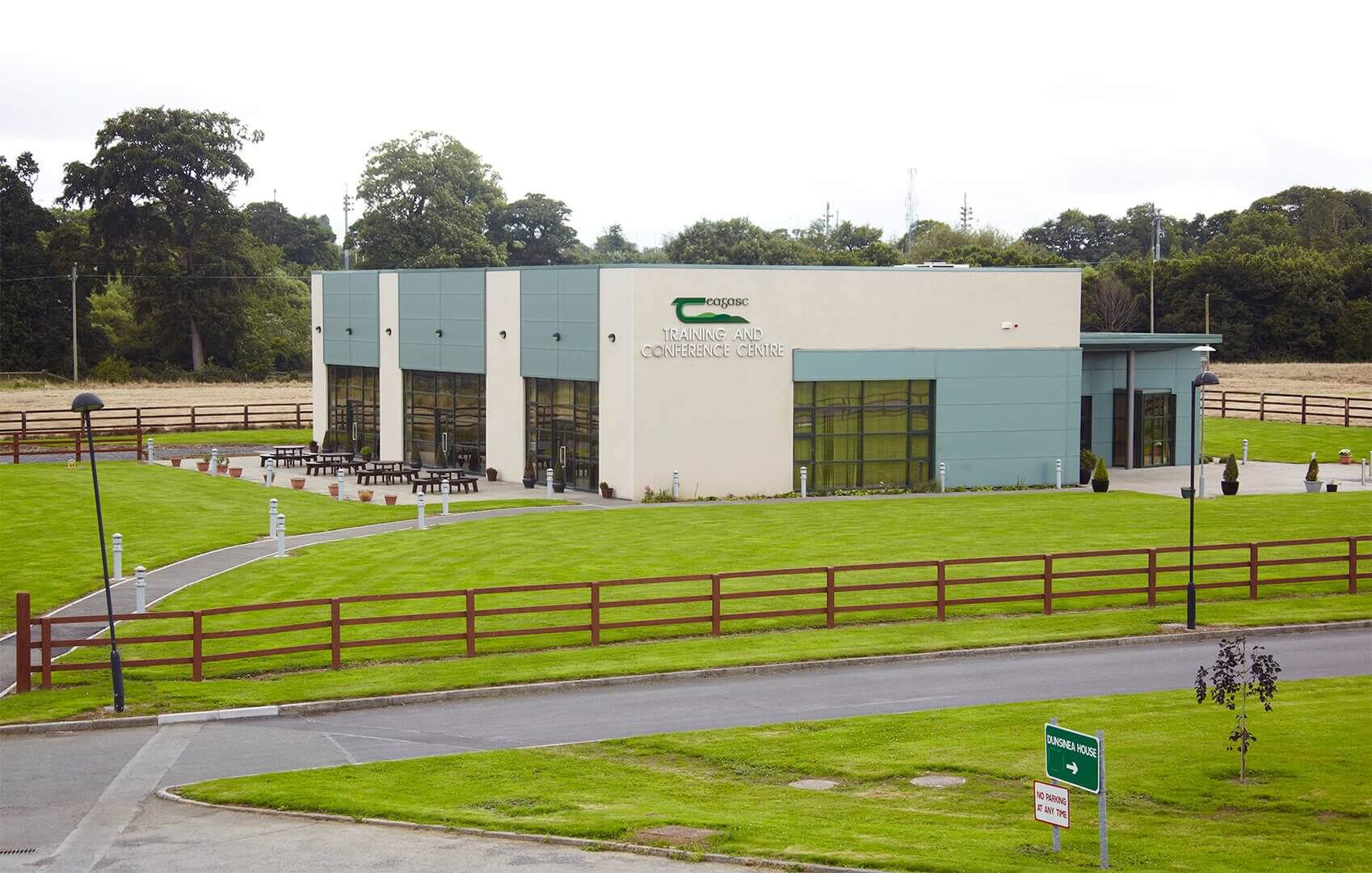
Teagasc, Ireland’s leading national body dedicated to agricultural research, advisory services, and education, plays a pivotal role in promoting sustainability within the agri-food sector. With a core focus on improving farming productivity, competitiveness, and environmental stewardship, Teagasc is a key player in advancing sustainable agriculture practices across Ireland. Their commitment to supporting the sector with science-based innovation has helped position Ireland as a leader in sustainable farming and food production.
One of the major areas of focus for Teagasc is reducing the ecological footprint of agriculture while maintaining farm productivity. The organisation has been heavily involved in research and advisory services aimed at decreasing greenhouse gas emissions and improving overall environmental practices within farming. As part of this, Teagasc has embraced innovative technologies to enhance sustainability. A prime example is their recent integration of the Harp CX2 food waste processor into their operations
The Harp CX2: Transforming Food Waste into Valuable Fertiliser
The installation of the Harp CX2 Biodigester at Teagasc marked an important step in demonstrating how agricultural research facilities can integrate circular waste management into everyday operations. Teagasc, Ireland’s national body for agricultural research, advisory services, and education, is widely recognised for its role in advancing sustainable farming practices and supporting the transition to a greener food system. The decision to install a Harp food waste processor formed part of the organisation’s wider mission to explore practical technologies that reduce waste while returning valuable nutrients back to the soil.
Working closely with the Harp Renewables team, the installation process involved detailed planning to ensure the system could be seamlessly integrated into Teagasc’s existing waste management and research activities. Once operational, the CX2 began processing organic materials generated on-site, particularly mushroom waste and other biodegradable food residues. These materials are now fed directly into the system, where they undergo aerobic digestion and are transformed into a nutrient-rich fertiliser-like by-product.
The CX2 system is capable of processing up to approximately 2,000 litres of organic waste per week, allowing Teagasc to divert a significant volume of organic material away from traditional waste disposal routes. Over the course of a full year, this equates to more than 100,000 litres of organic waste being treated on-site, dramatically reducing the need for external transport and landfill disposal. Instead of becoming a waste stream, this material is converted into a valuable agricultural input.


Specifications
- Equipment: Harp CX2 with a built-in bin tipper
- Waste Stream: On-site canteen waste, food waste, mushrooms
- Capacity: 285 Litres/Day, 2000 Litres/Week, 104,000 Litres/Year
- Estimated CO2 Savings: -1497.2 KgCO2eq (- 1.5 Tonnes CO2eq
Central to the process are aerobic enzymes, which play a critical role in accelerating the breakdown of organic material. These biological catalysts enable the rapid decomposition of waste in the presence of oxygen, transforming complex organic compounds into simpler substances that resemble compost-like fertiliser. Because the digestion process occurs aerobically rather than anaerobically, it avoids the methane-producing conditions commonly associated with landfill decomposition. As a result, the system not only reduces waste volume but also helps mitigate greenhouse gas emissions.
Within less than 24 hours, the organic material processed in the CX2 is converted into a stabilised output that can be reused as a soil enhancer. At Teagasc, this by-product is applied across land used for agricultural research and soil improvement trials. By returning nutrients such as nitrogen, phosphorus, and organic matter back into the soil, the fertiliser supports improved soil structure, fertility, and moisture retention.
Early operational data indicates that the system reduces the original waste volume by up to 80–90%, meaning that the majority of organic material is effectively converted into a manageable and beneficial product. Looking ahead, Teagasc forecasts that continued use of the CX2 will allow the organisation to process well over half a million litres of organic waste over the next five years, creating a steady supply of nutrient-rich material that can be reintegrated into agricultural systems.
This closed-loop approach reflects the broader sustainability philosophy promoted by Teagasc. Rather than treating food and agricultural residues as waste, the CX2 enables them to be viewed as a resource. Mushroom waste and other organic materials are now recycled directly into soil improvement programmes, demonstrating how innovative technology can support more regenerative farming practices.
Through the adoption of the Harp CX2 biodigester, Teagasc has created a practical example of circular agriculture in action. The system not only reduces waste and emissions but also strengthens the connection between food production, soil health, and environmental sustainability—an outcome that aligns closely with Teagasc’s long-term vision for a more resilient and eco-friendly agricultural sector.
A Circular Economy for a Sustainable Future
Teagasc’s investment in the Harp CX2 promotes sustainable agriculture by producing nutrient-rich fertiliser that enhances soil health and supports eco-friendly farming practices. This aligns with Teagasc’s sustainability goals, including precision farming and conservation techniques, helping reduce carbon emissions and contribute to a greener future for Irish farming.
The Harp CX2 at Teagasc is a prime example of how sustainable waste management creates a circular economy in agriculture. By converting food waste into valuable fertiliser, Teagasc reduces landfill waste, improves soil health, and promotes sustainable farming. This technology supports Teagasc’s efforts to balance productivity with environmental responsibility, ensuring a greener future for both farmers and the environment.
With Teagasc’s commitment, Ireland is advancing towards a more sustainable agricultural sector. The Harp CX2 is key to this transformation, improving waste management, reducing carbon emissions, and supporting sustainable practices for generations to come. how many words is this


0 Comments