
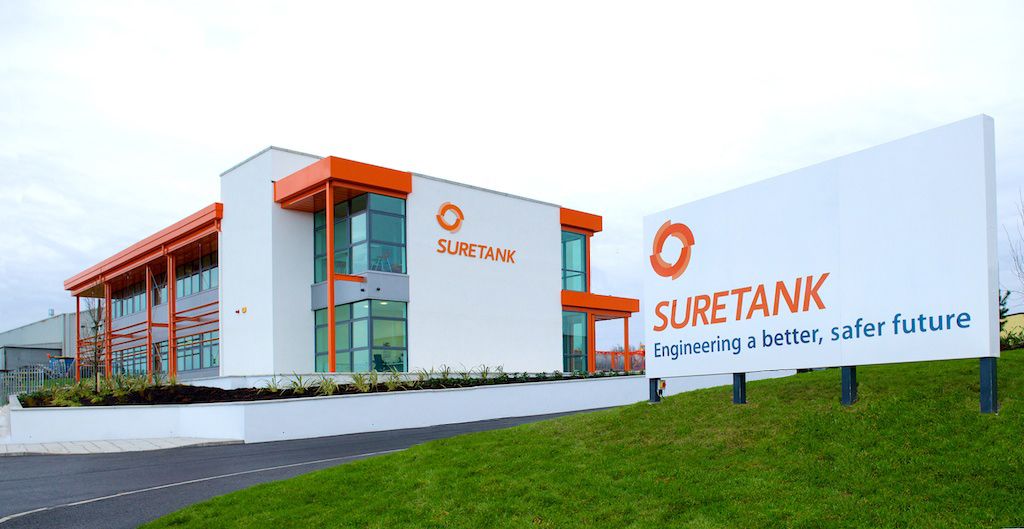
As a global manufacturer of tank containers and specialist equipment, Suretank operates in a sector where precision, safety, and engineering excellence are paramount. Sustainability has long been embedded in its core operations—from product design to manufacturing efficiency—but the company identified an often-overlooked opportunity much closer to home: the workplace canteen.
While food waste may seem insignificant compared to industrial outputs, Suretank recognised something many organisations miss—it is one of the most visible and behaviour-driven sustainability challenges within a business. Addressing it wouldn’t just reduce emissions; it would actively engage employees in the company’s environmental mission.
The Hidden Opportunity in Everyday Operations
Across many industrial sites, canteens generate consistent volumes of organic waste. Traditionally, this waste is collected, transported, and processed off-site—creating unnecessary emissions, additional costs, and a disconnect between employees and the impact of their daily habits.
For Suretank, this wasn’t aligned with its broader sustainability ambitions. The company saw an opportunity to bring waste management closer to the source, making it immediate, measurable, and meaningful.
The goal was not just to reduce waste—but to create awareness, accountability, and participation across the workforce.
A Simple Solution with Strategic Impact
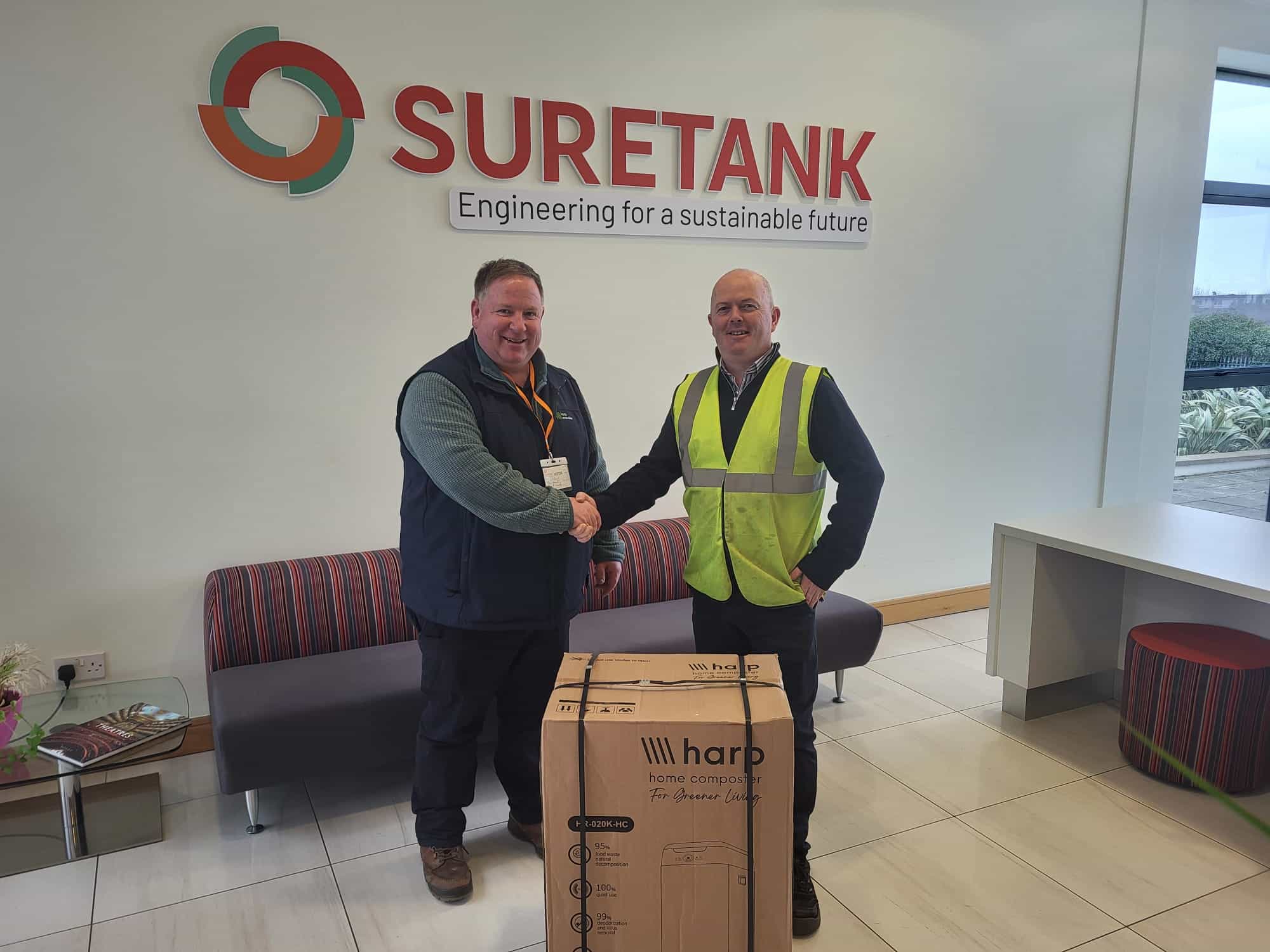
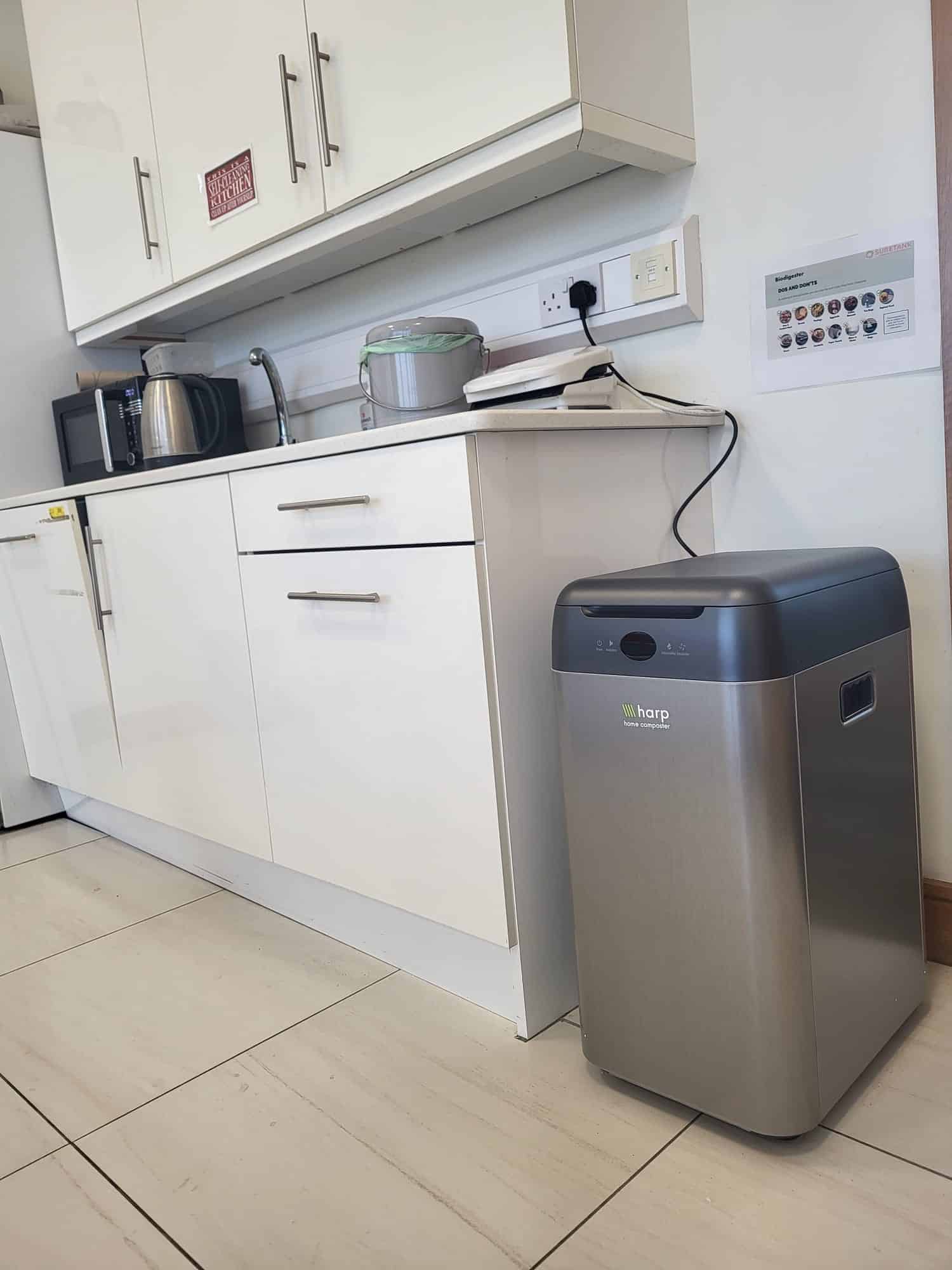
To achieve this, Suretank introduced the Harp Home Composter across its canteen facilities. Compact, efficient, and designed for daily use, the system processes food waste directly on-site, converting it into nutrient-rich compost within 24 hours.
With a capacity of approximately 2kg per day, the unit is ideally suited to workplace environments where food waste is generated steadily rather than in bulk. Its simplicity is key—staff can easily separate food waste, and the system operates automatically without requiring technical oversight.
What began as a single installation quickly proved its value. The initiative was expanded, with additional units deployed across multiple canteens—an indication that the impact extended beyond waste reduction alone.
Changing Behaviour, Not Just Processes
One of the most significant outcomes of the project has been its effect on workplace culture. By introducing visible, on-site composting, Suretank transformed food waste from an invisible by-product into a shared responsibility.
Employees became more conscious of what they were discarding. Waste segregation improved. Conversations around sustainability became more frequent and more practical.
Rather than sustainability being confined to corporate strategy documents, it became part of everyday decision-making—something employees could see, understand, and contribute to directly.
Operational and Financial Benefits
From an operational perspective, the impact has been immediate and measurable. By diverting food waste from general waste streams, Suretank has reduced the volume of waste requiring collection and disposal. This has led to lower waste management costs and improved recycling rates, as non-organic waste streams are now cleaner and easier to process.
The ability to manage waste on-site also reduces reliance on external services, providing greater control and consistency in operations. For a company built on efficiency and precision, this aligns naturally with its broader operational philosophy.
Environmental Impact That Scales
Although each unit processes relatively small volumes, the cumulative environmental impact is significant. The initiative is estimated to prevent over 4,500kg of methane emissions annually, equivalent to diverting approximately one tonne of food waste from landfill.
More importantly, the model is highly scalable. Additional units can be deployed across sites with minimal disruption, allowing the company to expand its impact incrementally while maintaining consistency.
The compost produced also offers opportunities for reuse—whether in landscaping, green spaces, or local environmental initiatives—further reinforcing a circular approach to resource management.
A Model for Workplace-Led Sustainability
Suretank’s approach highlights an important shift in how organisations think about sustainability. While large-scale industrial innovations remain critical, smaller, decentralised initiatives can play a powerful role in driving engagement and delivering measurable results.
By focusing on a simple, everyday challenge like food waste, Suretank has created a programme that is not only environmentally effective but also culturally transformative.
For other organisations, the lesson is clear: meaningful sustainability doesn’t always require complex infrastructure. Sometimes, the most impactful changes start with the places people interact with every day—and the habits they build within them.
From Initiative to Identity
What began as a practical solution to canteen waste has evolved into something more significant. It reflects Suretank’s broader commitment to embedding sustainability at every level of the organisation—not just in its products, but in its people and processes.
In doing so, Suretank demonstrates that leadership in sustainability is not only about scale—it’s about consistency, visibility, and the ability to turn intention into action across the entire business.
Click Here for further insights into the impact of on-site composting solutions, read the article on Harp Home Composters in the Farmers Journal.
You can also watch the video below to see how the Harp Home Composter works.



0 Comments