

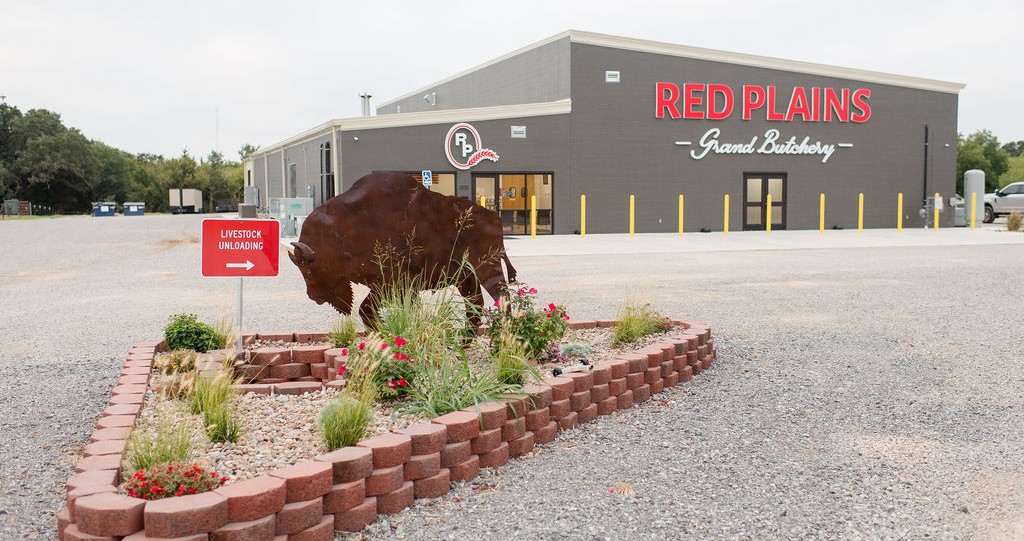
In the heart of Oklahoma, Red Plains Grand Butchery is redefining what modern meat processing can look like. Founded by Trey Clinkenbeard, the business was built on a clear vision: to support local ranchers, preserve the heritage of American agriculture, and deliver high-quality, custom meat products without compromise.
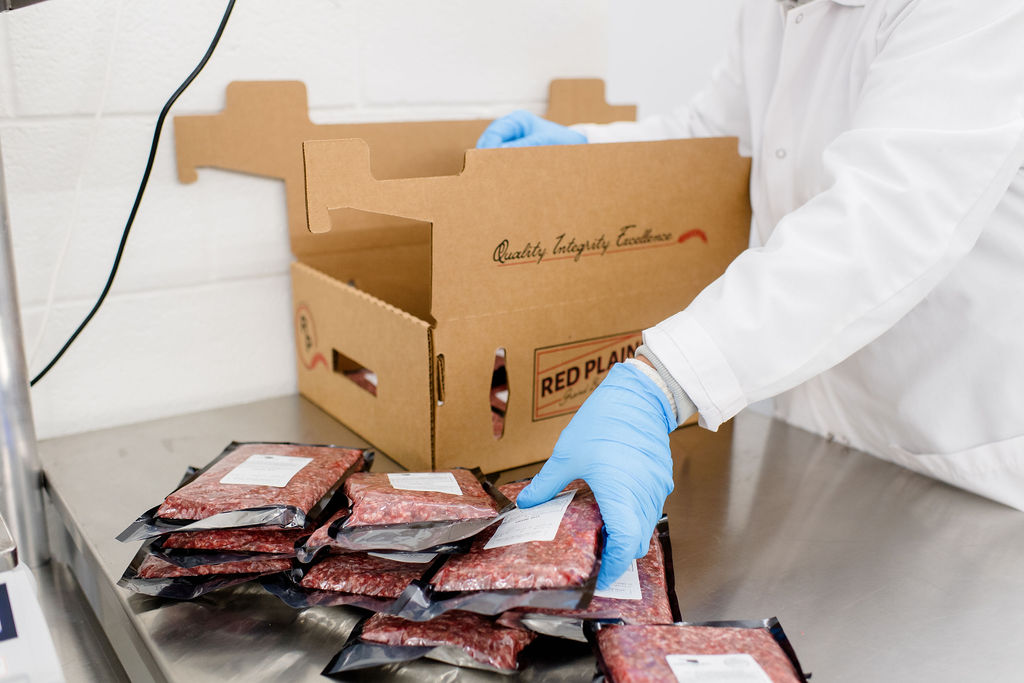
From premium cuts to value-added products like jerky, snack sticks, and summer sausage, Red Plains has positioned itself as both a production facility and a brand rooted in craftsmanship. As an FDA-inspected operation, food safety and quality are non-negotiable. But what truly distinguishes Red Plains is its willingness to challenge industry norms—particularly when it comes to sustainability.
The Reality of Scale in Modern Meat Processing
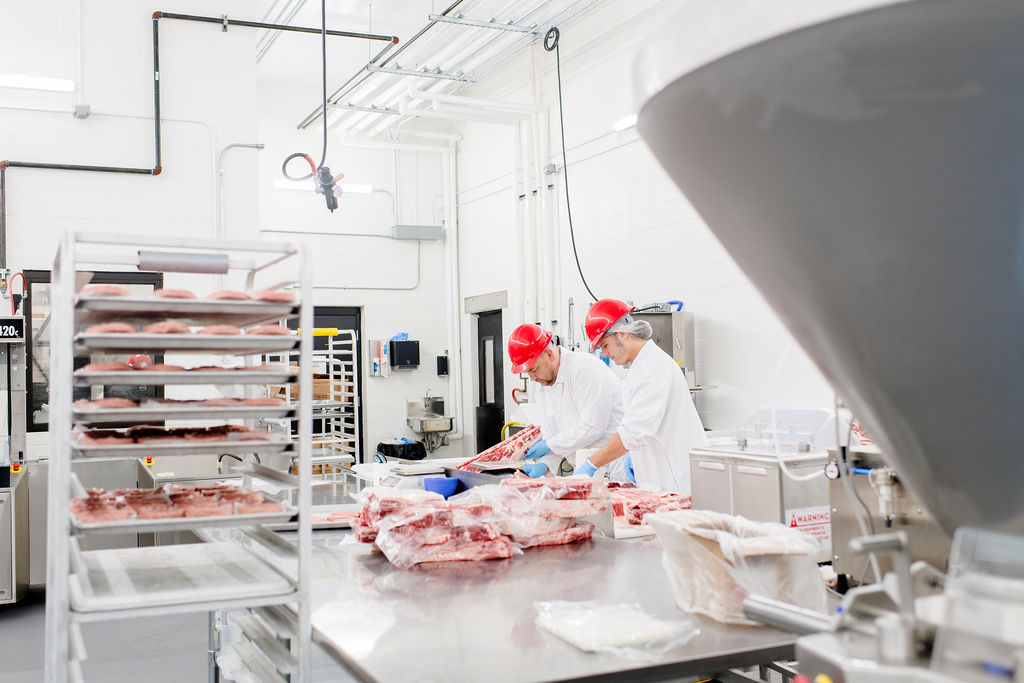
As Red Plains expanded, so did the complexity of its operations. With increased throughput came increased volumes of organic by-products—bones, fat, trimmings, and residual materials that are an unavoidable part of meat processing.
Traditionally, these waste streams are treated as a logistical burden. They require storage, transport, and disposal, often involving third-party contractors and landfill dependency. This creates a chain of inefficiencies: rising costs, increased handling, hygiene challenges, and exposure to fluctuating disposal fees.
For Red Plains, this wasn’t just an environmental issue—it was an operational bottleneck. The leadership team recognised that if they wanted to scale efficiently, they needed to rethink waste not as an output, but as a process to be optimised.
Investing in Infrastructure, Not Just Compliance
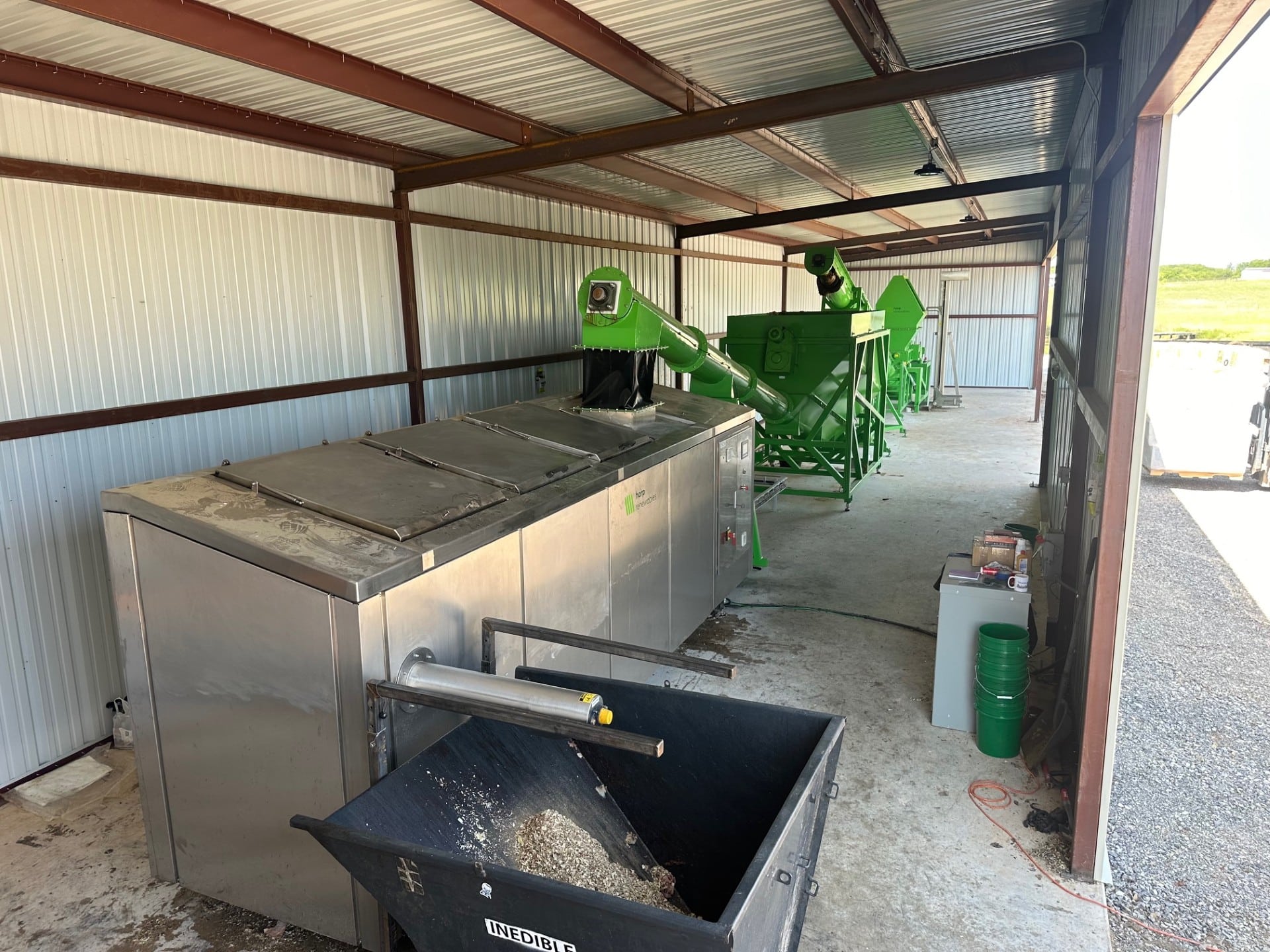
Rather than outsourcing the problem, Red Plains made a strategic decision to bring waste processing in-house. In partnership with Harp Renewables, they installed the Harp CX20 Biodigester, one of the most advanced on-site organic waste processing systems available.
This wasn’t a minor operational upgrade—it was a fundamental shift in how the facility functions.
The CX20 is capable of processing up to 20,000 litres of organic waste per week, including complex meat by-products. Through an aerobic digestion process, it breaks down organic material in a controlled, oxygen-rich environment, converting it into a stable, nutrient-rich output in less than 24 hours.
What makes the system particularly suited to Red Plains is its ability to handle high-density, high-fat, and bone-heavy waste streams—materials that are traditionally difficult to process efficiently. The integration of a shredder, hopper, auger, and bin lifter ensures that waste moves seamlessly from production to processing without disrupting workflow.
Integrating Technology into Daily Operations
At Red Plains, the CX20 is not a standalone unit—it is embedded into the operational rhythm of the facility. Waste generated during processing is fed directly into the system, eliminating the need for prolonged storage or secondary handling.
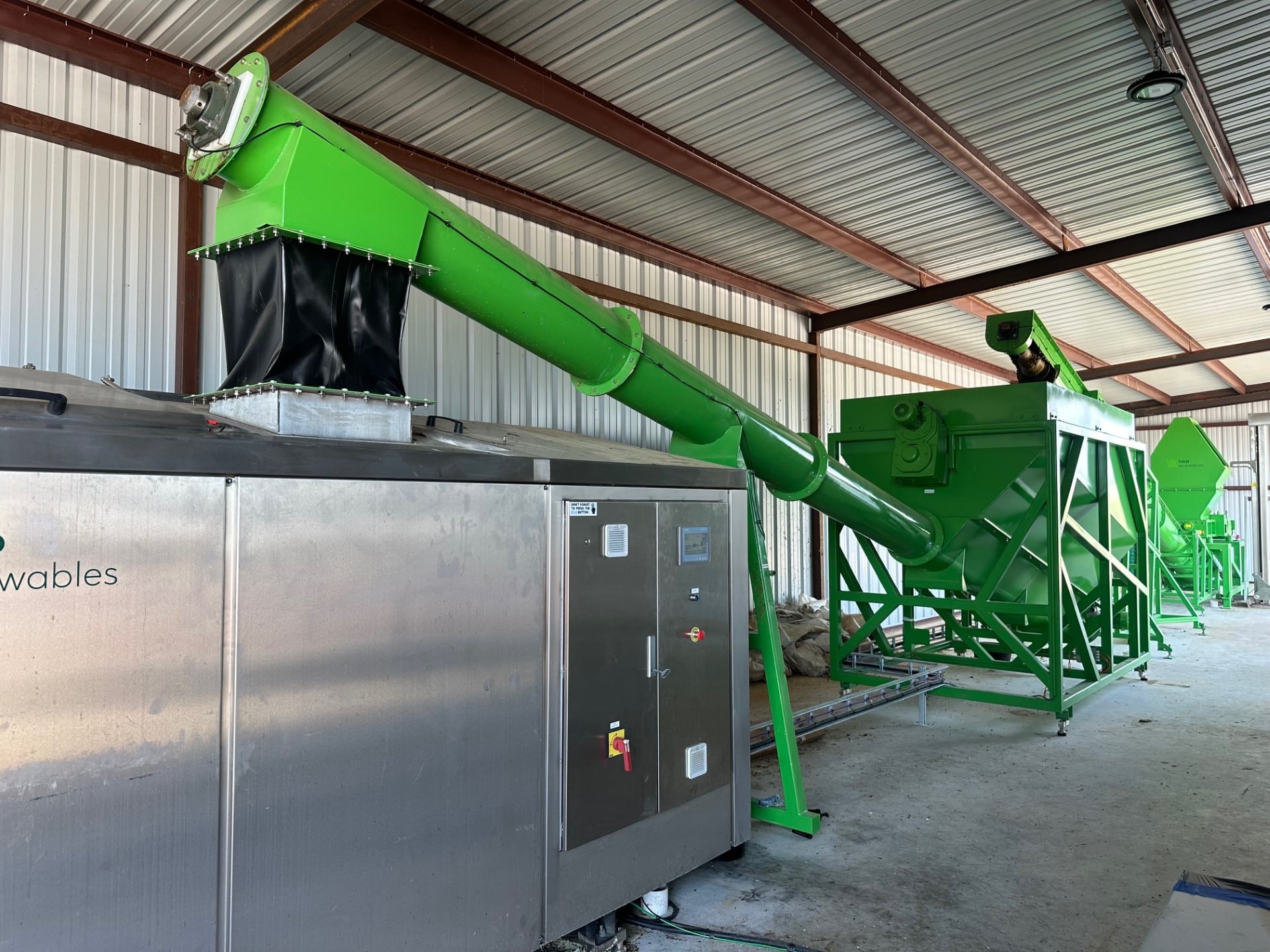
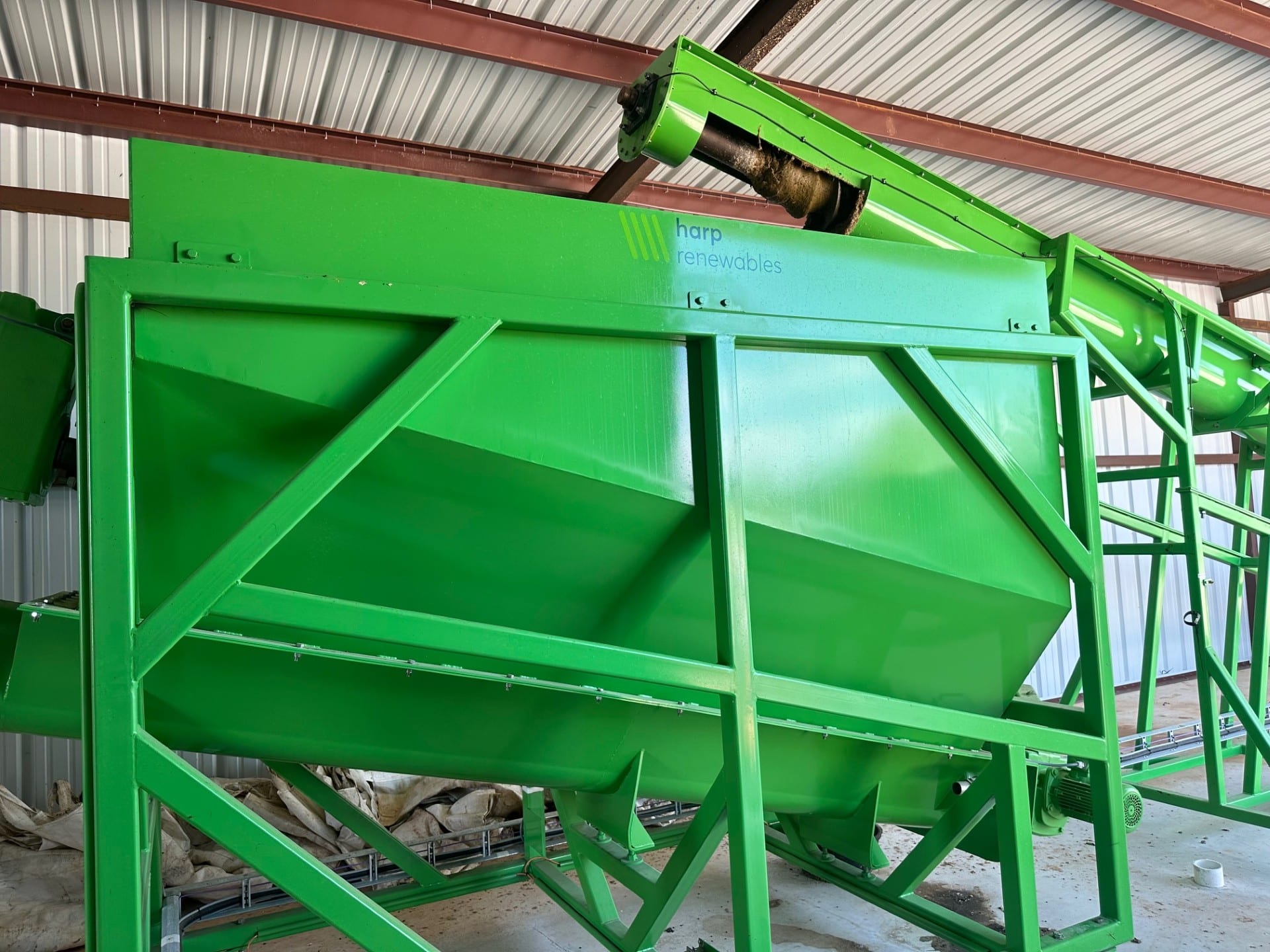
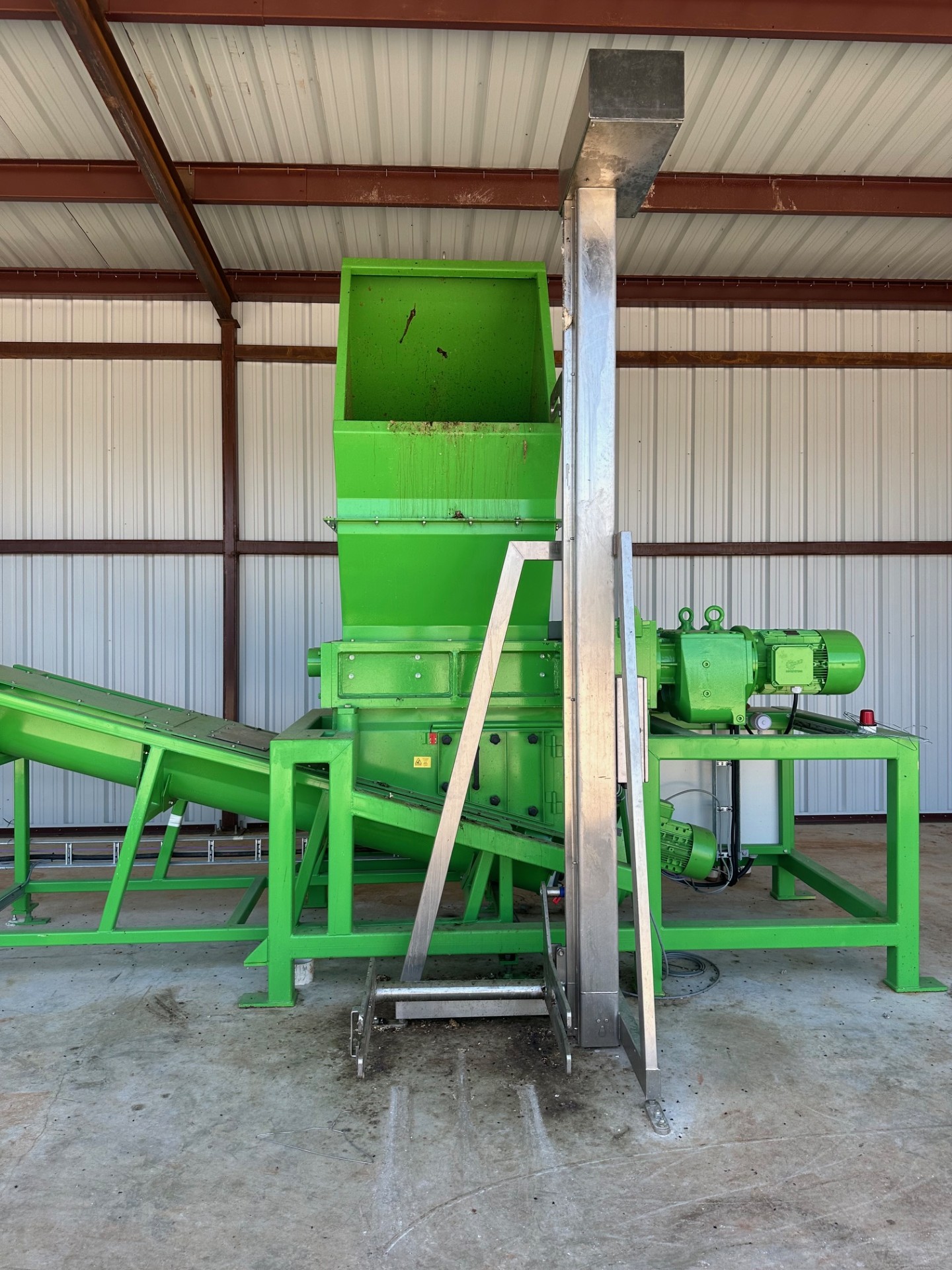
The machine’s automated controls continuously regulate temperature, moisture, and pH levels, ensuring optimal digestion conditions without requiring constant oversight. This level of automation reduces labour input while increasing consistency and reliability.
The immediate impact is visible on the processing floor. Waste no longer accumulates. Odours are reduced. Handling is minimized. The entire environment becomes cleaner, safer, and more efficient.
For a high-throughput meat processing facility, these changes are not cosmetic—they directly influence productivity, compliance, and staff working conditions.
Specifications
- Equipment: Harp CX20 with built-in bin lifter, shredder, hopper, and auger
- Waste Stream: Meat, factory waste, Abattoir/Slaughterhouse
- Capacity: 2857 Litres/Day, 20,000 Litres/Week, 1,040,000 Litres/Year
- Estimated CO2 Savings: -25,382.6 KgCO2eq (- 25.4 Tonnes CO2eq)
Financial Impact: From Cost Centre to Operational Efficiency
One of the most significant outcomes of the CX20 installation has been the transformation of waste management from a recurring expense into a controllable, optimised process.
Previously, costs associated with waste included transportation, third-party disposal fees, labour for handling, and the hidden inefficiencies of managing organic material across the facility. By processing waste on-site, Red Plains has significantly reduced its reliance on external services.
Transport frequency has decreased, disposal costs have stabilised, and labour previously tied up in waste handling has been reallocated to higher-value tasks within production.
At the same time, the output generated by the CX20 introduces new opportunities. The nutrient-rich material produced can be used in agriculture, landscaping, or soil improvement, creating potential for additional value creation or partnerships with local farms.
Environmental Performance at Industrial Scale
The environmental impact of the system is equally significant. By diverting organic waste from landfill, Red Plains avoids the methane emissions typically associated with anaerobic decomposition. Combined with reduced transport requirements, the facility achieves an estimated 25.4 tonnes of CO₂ savings annually.
More importantly, this is not a one-off initiative—it is embedded into daily operations. Every batch processed contributes to a continuous reduction in environmental impact, aligning sustainability with scale rather than limiting it.
Strengthening the Local Agricultural Ecosystem
Red Plains’ approach to sustainability extends beyond its own facility. By converting processing by-products into a usable soil enhancer, the company is effectively reconnecting with the agricultural cycle it originated from.
Local farmers and land users can benefit from this output, reducing reliance on synthetic fertilisers and improving soil health. In this way, Red Plains closes the loop between livestock production, processing, and land regeneration—something few meat processors achieve at scale.
Redefining What Leadership Looks Like in the Industry
Red Plains Butchery is not simply reducing waste—it is redefining how a modern meat processing facility operates. By investing in infrastructure that improves efficiency, reduces environmental impact, and creates long-term value, the company has positioned itself as a forward-thinking leader in the industry.
For other processors, the message is clear: sustainability is no longer just about compliance or brand image. When approached strategically, it becomes a tool for operational excellence, cost control, and long-term resilience.
Red Plains demonstrates that even in one of the most traditional sectors, innovation can unlock entirely new ways of working—without compromising quality, heritage, or community ties.



0 Comments