

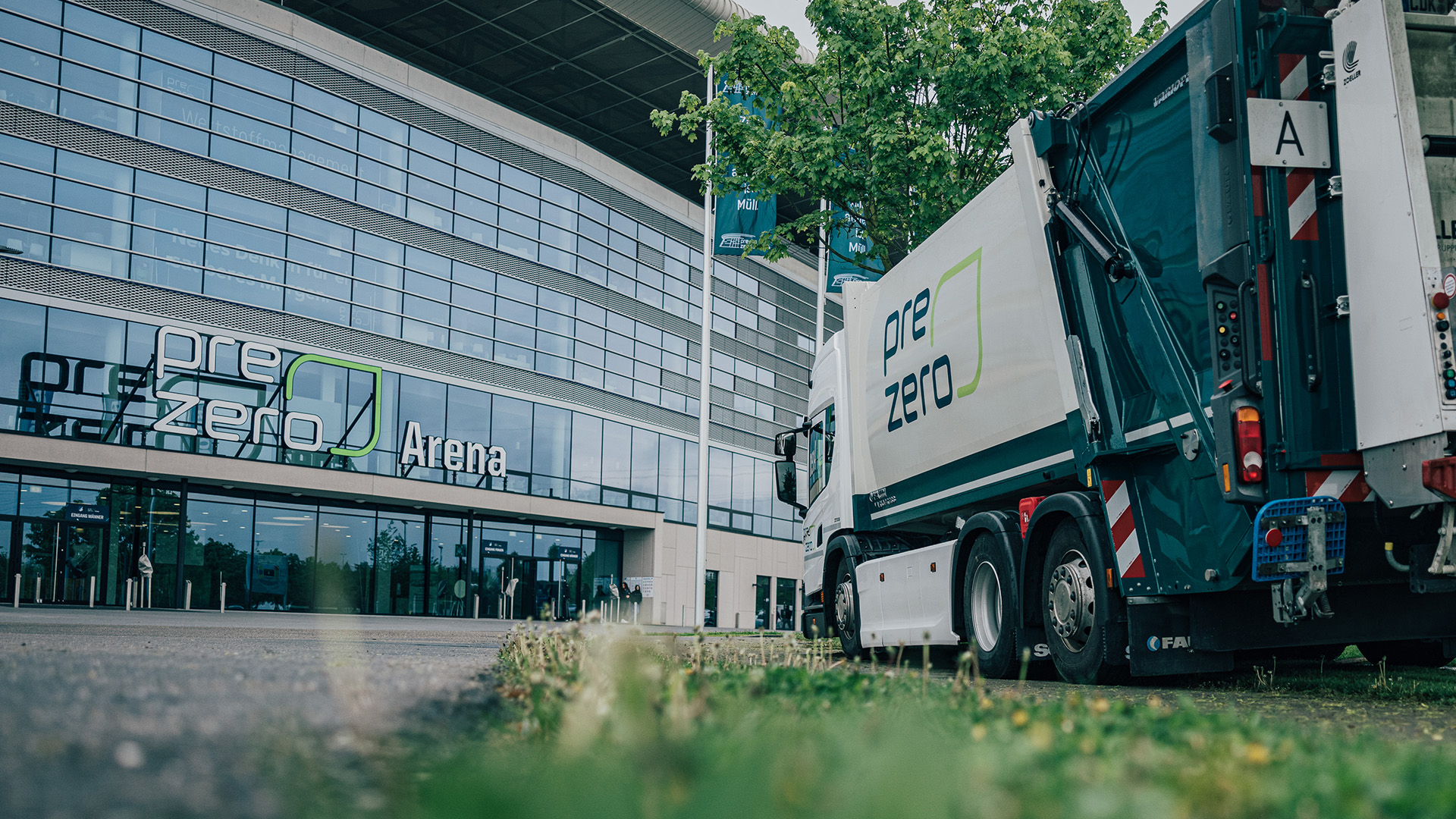
PreZero is a leading international waste management and recycling company operating across Europe and North America. As part of the Schwarz Group—one of the world’s largest retail groups—PreZero plays a key role in advancing sustainable waste solutions and supporting the transition toward a circular economy.
The company’s mission is to transform waste into valuable resources by reducing landfill dependence and reintegrating materials such as plastics, metals, paper, and organic waste back into production cycles. Through its network of recycling facilities, logistics systems, and environmental services, PreZero helps businesses and communities manage waste responsibly while reducing environmental impact.
As sustainability continues to shape global industry, PreZero has placed innovation at the centre of its strategy, investing in technologies that improve waste recovery and minimise greenhouse gas emissions.
Strengthening a Sustainability Commitment
PreZero’s sustainability approach focuses on closing resource loops and ensuring that materials are reused wherever possible. Rather than viewing waste as a disposal challenge, the company sees it as a resource that can be processed and returned to productive use.
Organic waste is an important part of this strategy. When food waste is sent to landfill, it decomposes anaerobically and produces methane—a greenhouse gas significantly more potent than carbon dioxide. For companies committed to reducing emissions, preventing organic waste from reaching landfill is therefore a critical step.
To strengthen its capacity to process organic waste efficiently, PreZero partnered with Harp Renewables to deploy the Harp CX50 Biodigester, the largest food waste processor in Harp’s technology range.
The Harp CX50: Large-Scale Organic Waste Processing
The Harp CX50 is designed specifically for large-scale operations such as recycling centres, food production facilities, and major waste management sites. The system uses an aerobic digestion process that breaks down organic waste in the presence of oxygen, significantly accelerating natural decomposition.
Inside the biodigester, organic materials are shredded and processed under carefully controlled conditions. Sensors continuously monitor key parameters such as temperature, moisture levels, and pH to ensure optimal digestion. Within less than 24 hours, food waste is converted into a stabilised, nutrient-rich fertiliser-like output.
The system installed at PreZero is equipped with a built-in bin lifter and integrated shredder, allowing large volumes of organic waste to be loaded efficiently while reducing manual handling. This automated approach improves safety and ensures consistent operational performance even at high processing volumes.
One of the most significant advantages of the CX50 is its ability to dramatically reduce waste volume. On average, the system reduces organic waste by approximately 70%, meaning far less material requires external transport or landfill disposal.


Specifications
- Equipment: Harp CX50 with Built-in Bin Lifter and Shredder
- Waste Stream: Recycling, food waste.
- Capacity: 7143 Litres/Day, 50,000 Litres/Week, 2,600,000 Litres/Year
- Estimated CO2 Savings: -60,421.7 KgCO2eq (- 60.4 Tonnes CO2eq)
This level of capacity allows PreZero to process substantial volumes of organic waste on-site while significantly reducing the environmental impact associated with landfill disposal and waste transport.
Results: Improving Efficiency and Environmental Performance
The integration of the CX50 biodigester was carried out through close collaboration between PreZero’s operational teams and Harp Renewables’ engineering specialists. Once installed, the system quickly became an important component of PreZero’s waste processing infrastructure.
Organic waste collected through PreZero’s recycling streams can now be processed directly on-site rather than being transported to external disposal facilities. Through the aerobic digestion process, food waste is rapidly converted into a soil-like by-product that can be used as a fertiliser or soil enhancer.
This transformation delivers multiple operational and environmental benefits. By reducing the amount of organic material sent to landfill, PreZero significantly lowers greenhouse gas emissions associated with methane release. At the same time, the system helps improve hygiene within waste processing facilities by reducing odours and minimising the conditions that attract pests.
The fertiliser-like output produced by the system can be used in landscaping, soil improvement, or agricultural applications, contributing to healthier ecosystems while supporting circular resource use.
Supporting a Zero-Waste Vision
The adoption of the Harp CX50 biodigester aligns closely with PreZero’s broader vision of creating a zero-waste society. By investing in innovative waste processing technology, the company continues to demonstrate its commitment to improving recycling systems and reducing environmental impact.
For PreZero, solutions like the CX50 represent more than operational improvements—they are part of a long-term strategy to transform how waste is managed globally. By treating organic waste as a valuable resource rather than a disposal problem, the company is helping businesses and communities move toward more sustainable waste management practices.
Building a More Sustainable Future
PreZero’s partnership with Harp Renewables highlights how advanced technology can help large-scale waste management companies achieve meaningful environmental progress. By processing millions of litres of organic waste annually and converting it into a useful by-product, the CX50 biodigester plays a key role in reducing landfill dependency and supporting the circular economy.
As PreZero continues to expand its environmental initiatives, investments in technologies like the Harp CX50 will remain central to its mission—creating cleaner cities, recovering valuable resources, and building a more sustainable future for generations to come.


0 Comments