
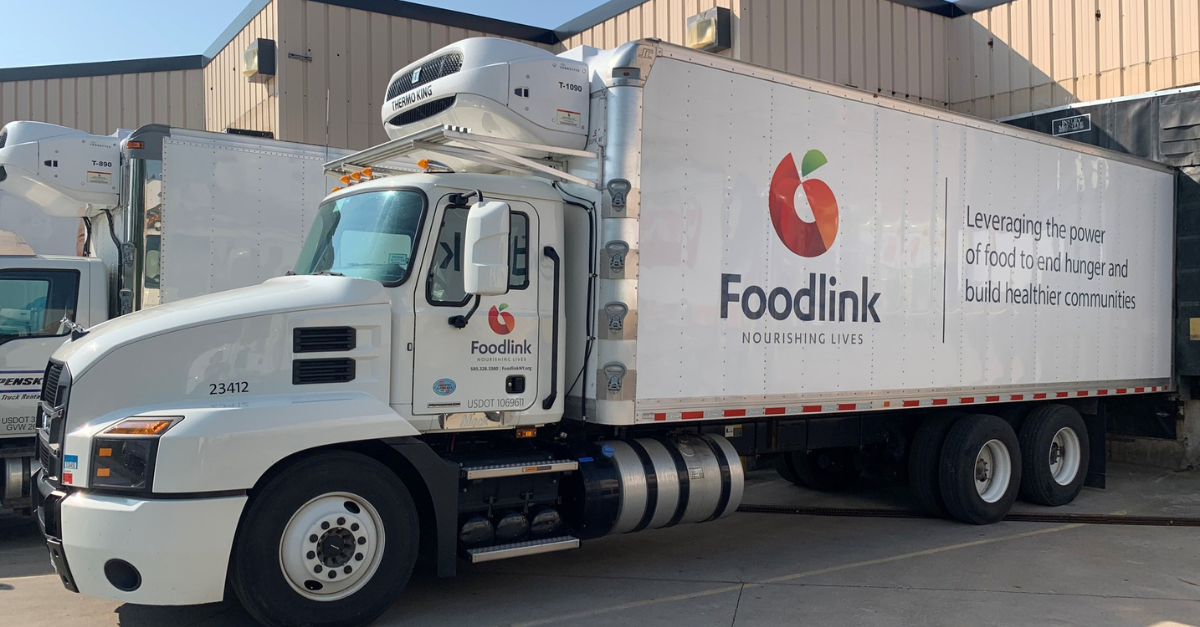
Foodlink Inc has been at the heart of the Greater Rochester community since its founding in 1978. Originally established to rescue and redistribute surplus food to emergency food providers, Foodlink has grown into a dynamic organisation tackling food insecurity through a range of innovative programmes that extend well beyond traditional food banking. Today, Foodlink not only distributes millions of pounds of food annually through its network of partner agencies but also actively works to improve how communities access and interact with healthy, affordable food.
Sustainability as a Core Operational Strategy
Sustainability within community food systems extends well beyond redistribution. It involves preventing avoidable waste at source, improving supply chain efficiency, and ensuring that surplus food delivers the greatest possible social and environmental value. For Foodlink, large-scale food rescue is a core pillar of this approach — recovering surplus and unsold food from farms, manufacturers, and retailers and redirecting it into homes and community kitchens instead of landfill. This not only reduces methane emissions associated with decomposing food waste, but also strengthens food equity by supporting those most in need.
However, even with a comprehensive redistribution network in place, some organic waste remains unavoidable. Recognising this, Foodlink prioritised responsible management of its residual waste stream as part of its wider sustainability strategy. By introducing the Harp CX1 aerobic on-site biodigester, the organisation integrated modern treatment technology directly into its facility — reducing landfill dependency, improving operational control, and reinforcing its commitment to maximising the life and value of food resources at every stage.
Beyond Food Banking: A Community-Centred Approach
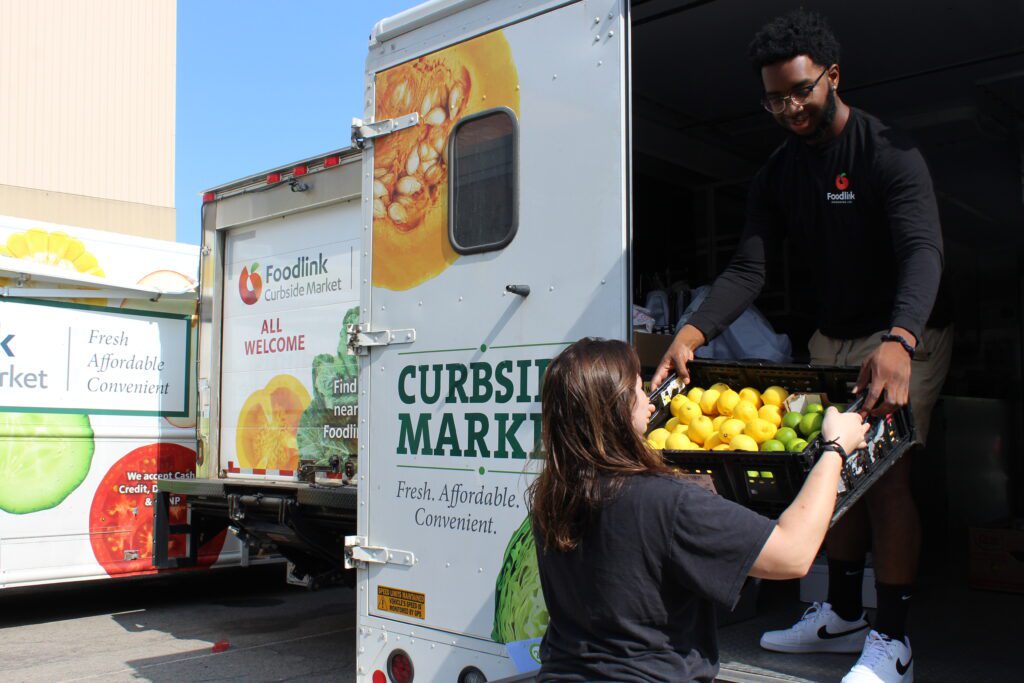
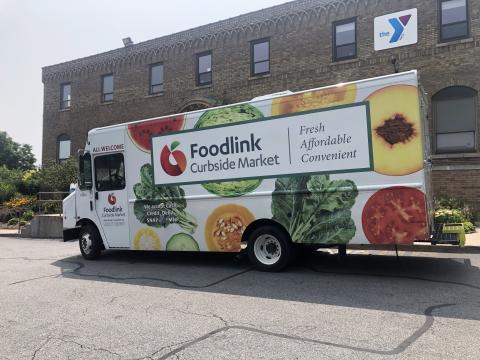
Foodlink’s mission centres on creating equitable food access and building healthier communities through multiple interrelated initiatives. Its Curbside Market brings fresh produce and affordable grocery options directly into neighbourhoods lacking access to healthy food, making nutritious choices more convenient and affordable for residents across Rochester and surrounding counties.
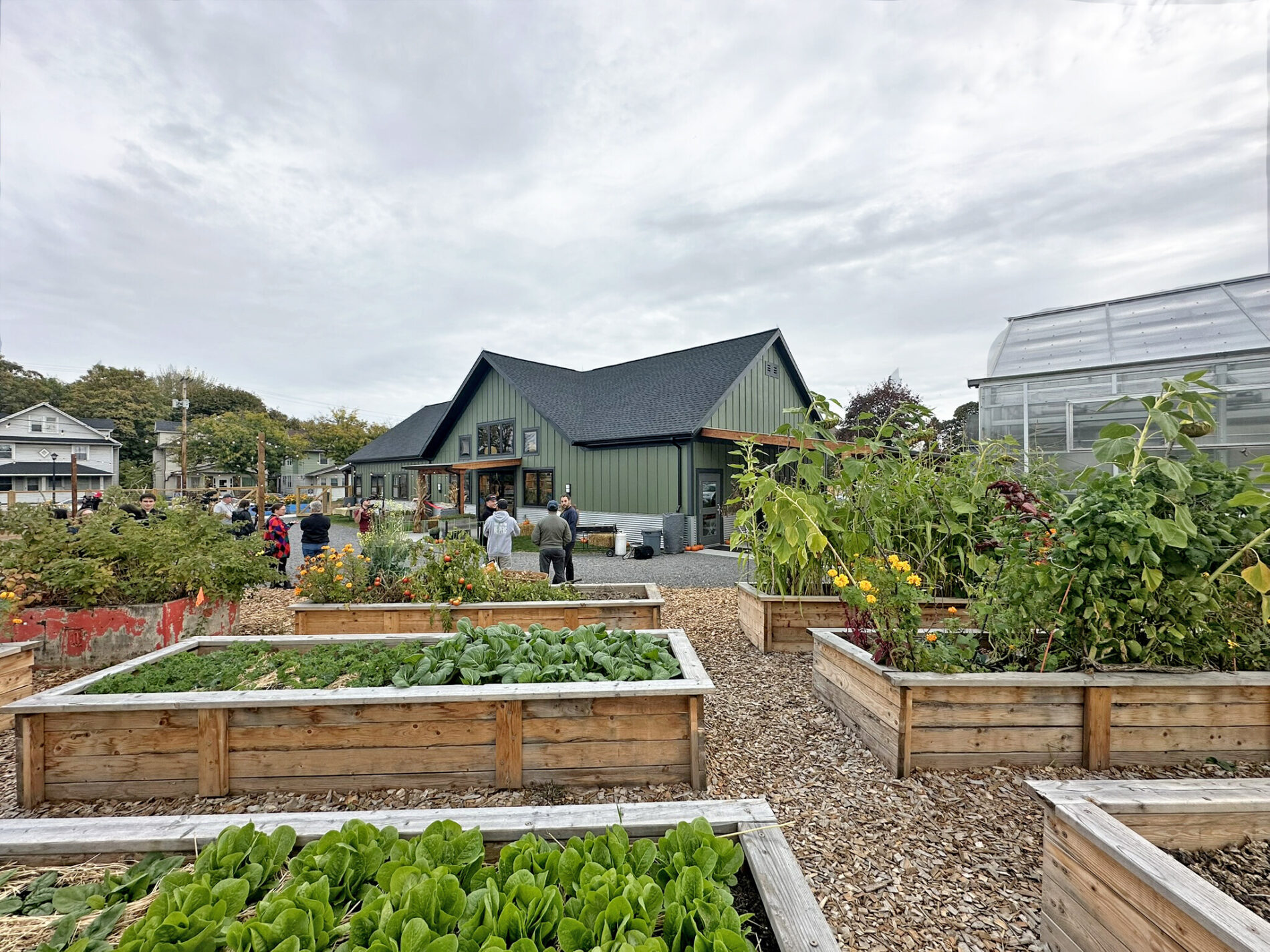
The Foodlink Community Farm — a 2.3-acre urban agriculture campus — not only supplies locally grown produce but also fosters education and community engagement through gardening, farm tours, and experiential learning. Other programmes include nutrition education workshops that teach cooking and healthy eating skills, and a Community Café that provides training opportunities for culinary apprentices while serving delicious meals to the public. Through this broad ecosystem of programmes, Foodlink aims not just to feed people today, but to build long-term skills, strengthen community connections, and shift habits toward healthier and more sustainable living.
Project Overview: Harp CX1 On-Site Digester
To further advance environmental performance and operational efficiency, Foodlink implemented the Harp CX1 aerobic on-site digester.
The Harp CX1 is designed to convert up to 1,000 litres of organic waste per week into a high-value fertiliser within 24 hours. Through accelerated aerobic digestion, the system rapidly stabilises food waste at source, reducing the need for external collection and off-site treatment.
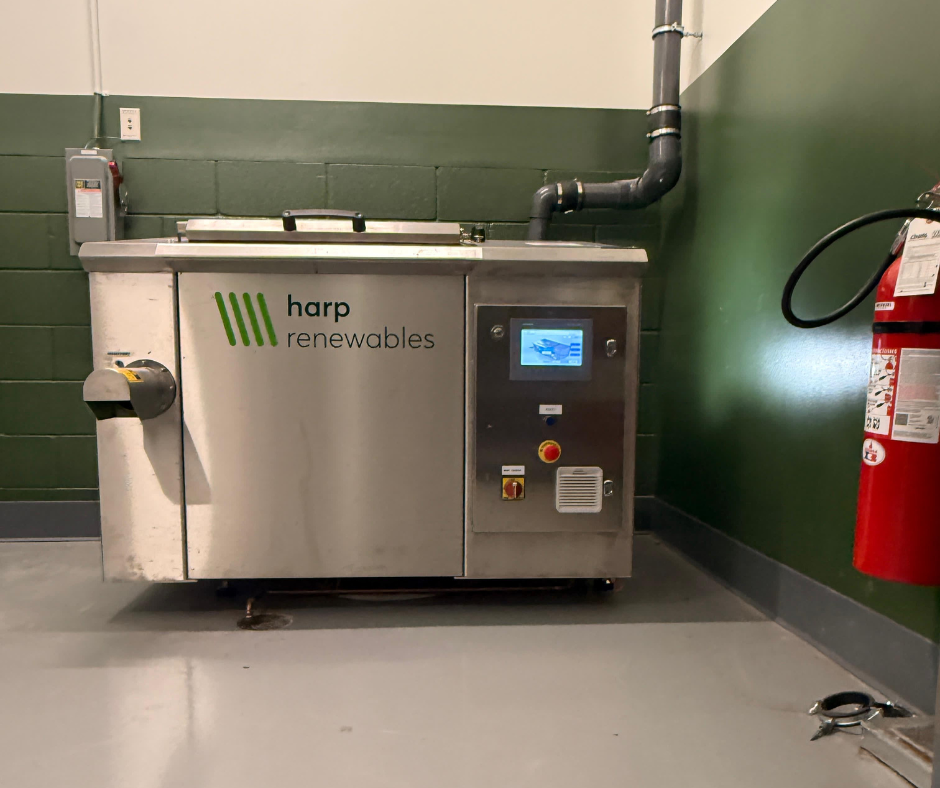
Key Features and Specifications:
- Equipment: Harp CX1 with load cells & remote monitoring
- Waste Stream: Organic Waste from foodbank operations
- Capacity: 142 Litres/Day, 1,000 Litres/Week, 52,000 Litres/Year
- Estimated CO2 Savings: -203 kgCO₂eq annually
Engineered for ease of integration, the fully automated machine requires minimal operator input. Advanced sensors continuously regulate critical digestion parameters such as temperature and pH, ensuring consistent performance. Built-in safety systems prevent overpressure and maintain secure operation.
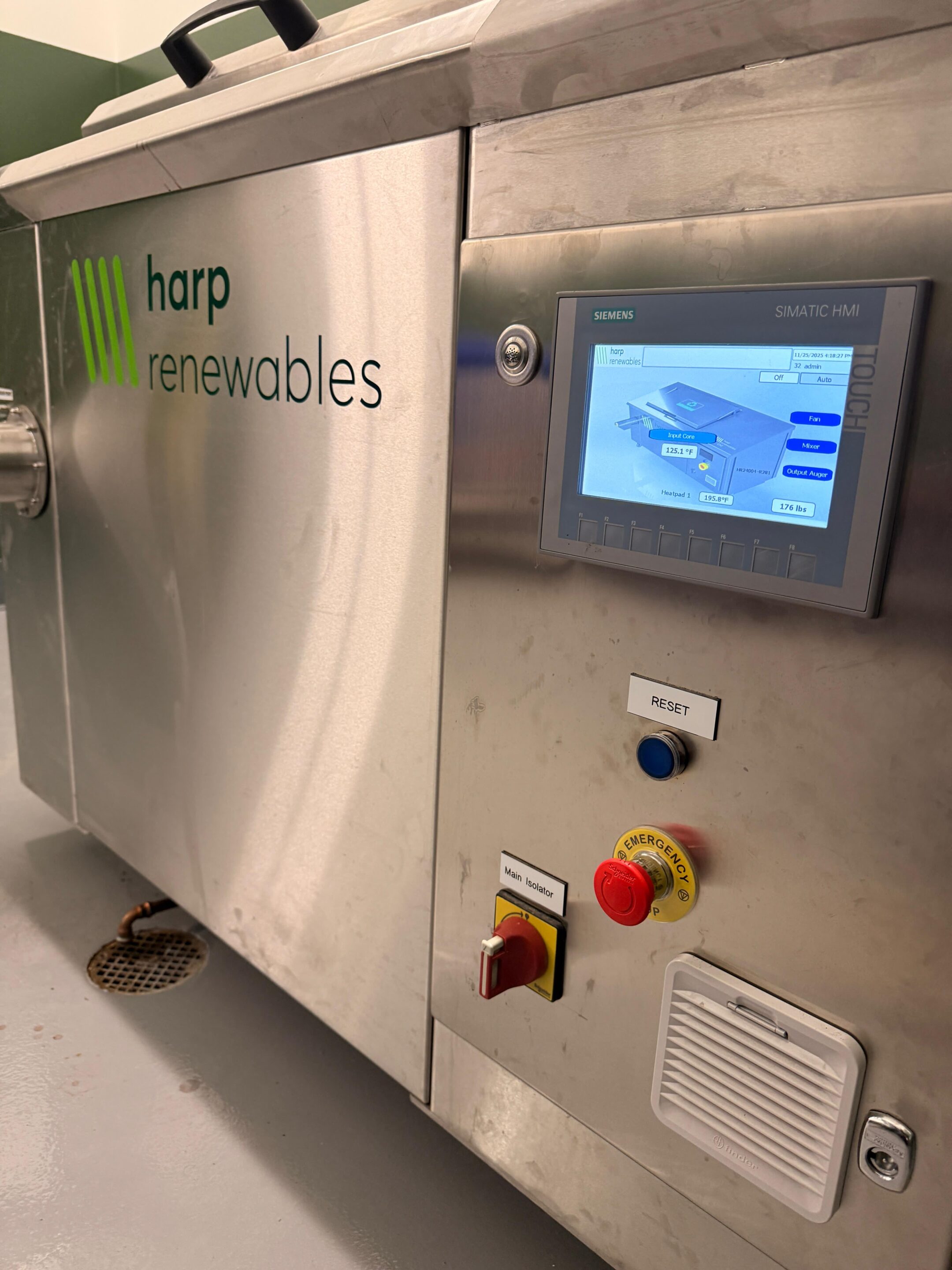
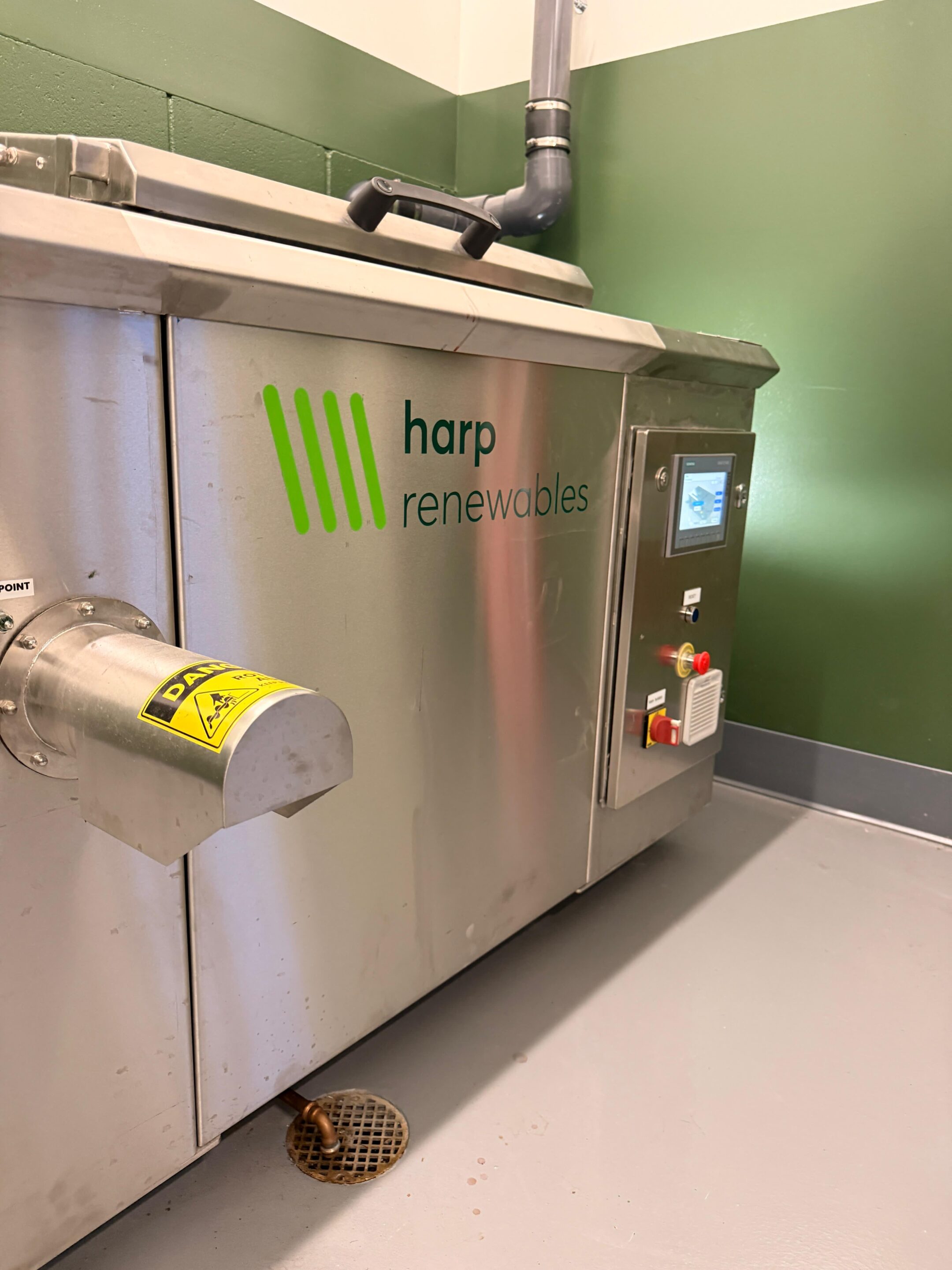
The integrated load cells accurately measure waste inputs, providing reliable tracking data. The Wi-Fi cloud reporting platform enables remote monitoring, offering real-time visibility into system performance and supporting sustainability reporting and compliance tracking.
From Implementation to Impact
By introducing on-site biodigestion, Foodlink has added a new chapter to its sustainability journey — one that reflects both operational responsibility and long-term environmental thinking. The Harp CX1 now processes up to 52,000 litres of organic waste annually within Foodlink’s own facility, significantly reducing the need for off-site collections and disposal. This shift delivers measurable carbon savings of approximately -203 kg CO₂eq per year, driven by avoided landfill emissions and a reduced transport footprint. While the numbers are important, they represent something bigger: a conscious move toward localised, accountable waste management embedded directly into daily operations.
Foodlink’s story has always centred on maximising the value of food. From rescuing surplus produce at farm level to redistributing unsold goods from manufacturers and retailers, the organisation works across the supply chain to ensure edible food reaches people rather than bins. Its mobile markets, community partnerships, and urban agriculture initiatives reflect a deep commitment to food access and equity. The addition of on-site biodigestion builds on this foundation — addressing not just hunger, but the full lifecycle of food within the community.
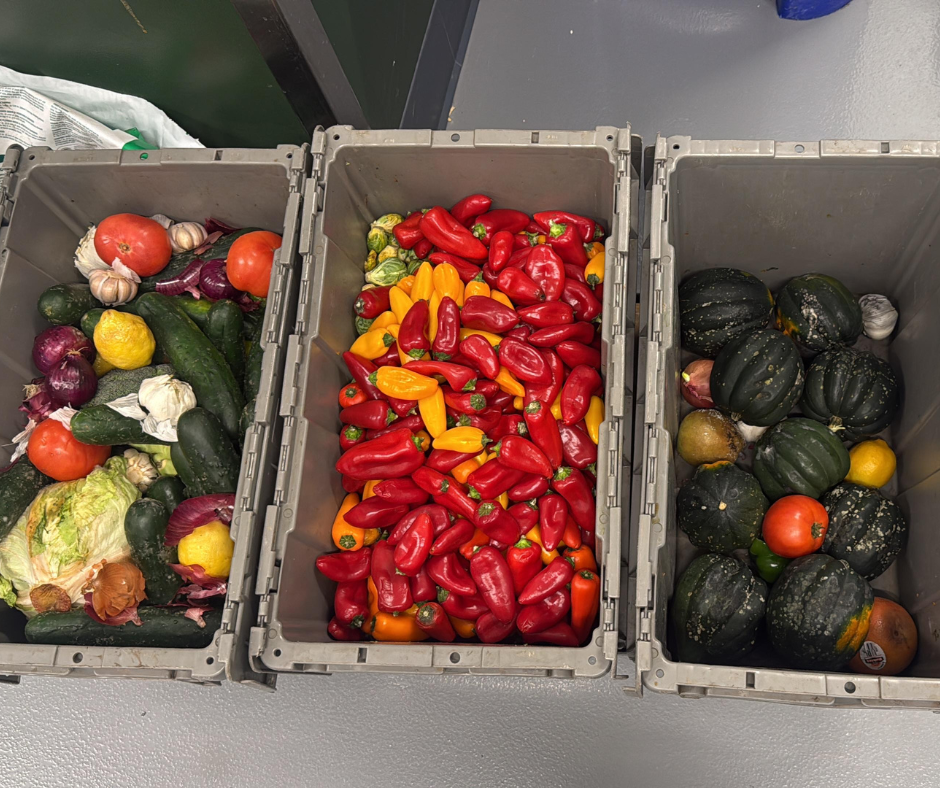
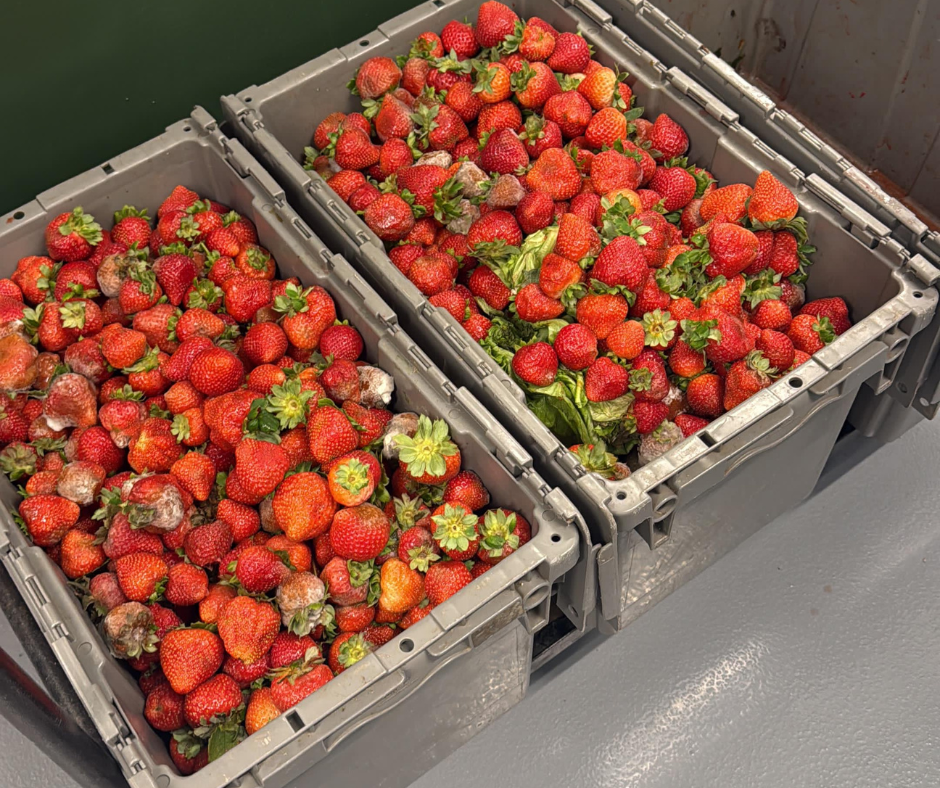
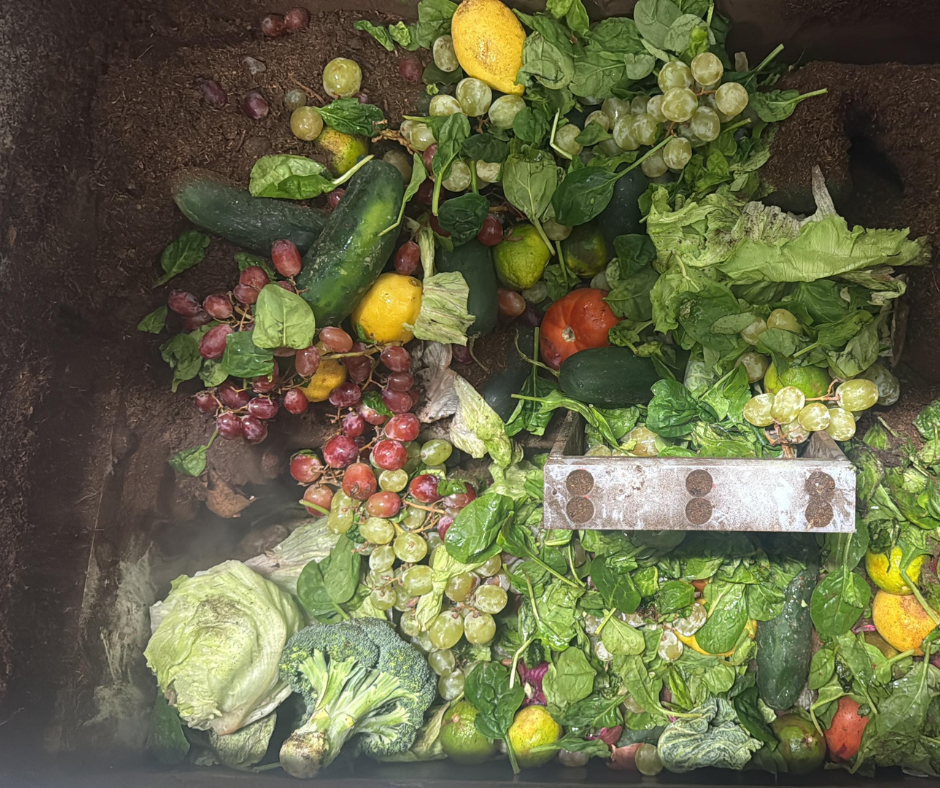
Even in the most efficient redistribution systems, some organic material remains unavoidable. For Foodlink, the question became: how can this residual waste reflect the same principles of stewardship that guide the rest of our work? On-site aerobic digestion offered an answer. Instead of contributing to methane emissions in landfill environments, organic waste now remains within a productive loop, transforming into a material that can support soil health and circular resource use.
In this way, the project is more than a technical upgrade. It reinforces Foodlink’s broader philosophy — that sustainability and social impact are interconnected. By integrating environmental responsibility into its infrastructure, Foodlink continues to model a system where food is valued at every stage, resources are managed thoughtfully, and community wellbeing and climate action move forward together.
From Rescue to Responsibility
For Foodlink, sustainability has never been a standalone project — it has always been part of the organisation’s story. Each day begins with recovering surplus food from farms, manufacturers, and retailers, ensuring that perfectly edible produce reaches families, community kitchens, and local partners instead of landfill. That rescue work sits at the heart of Foodlink’s mission.
But as the organisation grew, so did its understanding of the full lifecycle of food. Even in the most efficient redistribution network, some organic material is unavoidable. Rather than viewing this as an operational by-product, Foodlink saw it as the next challenge to solve. By introducing on-site organic waste treatment, the team extended its ethos of responsibility beyond redistribution — reducing landfill reliance, lowering emissions, and keeping resources in productive use. The same commitment that guides food rescue now shapes how residual waste is managed.
Strengthening Communities — Today and Tomorrow
Foodlink’s work has always been about more than meals. Through mobile markets, urban agriculture initiatives, and community partnerships, the organisation invests in long-term food security and local resilience. Integrating sustainable waste infrastructure is a natural continuation of that journey — ensuring that environmental stewardship sits alongside social impact.
In choosing to close the loop within its own operations, Foodlink demonstrates that feeding communities and protecting the planet are not separate ambitions. They are interconnected responsibilities. By valuing food at every stage — from surplus rescue to responsible waste management — Foodlink continues to build a model of a food system that nourishes people today while safeguarding the environmental foundations that will sustain them tomorrow.
To explore innovative approaches to food waste management, visit www.harprenewables.com



0 Comments