

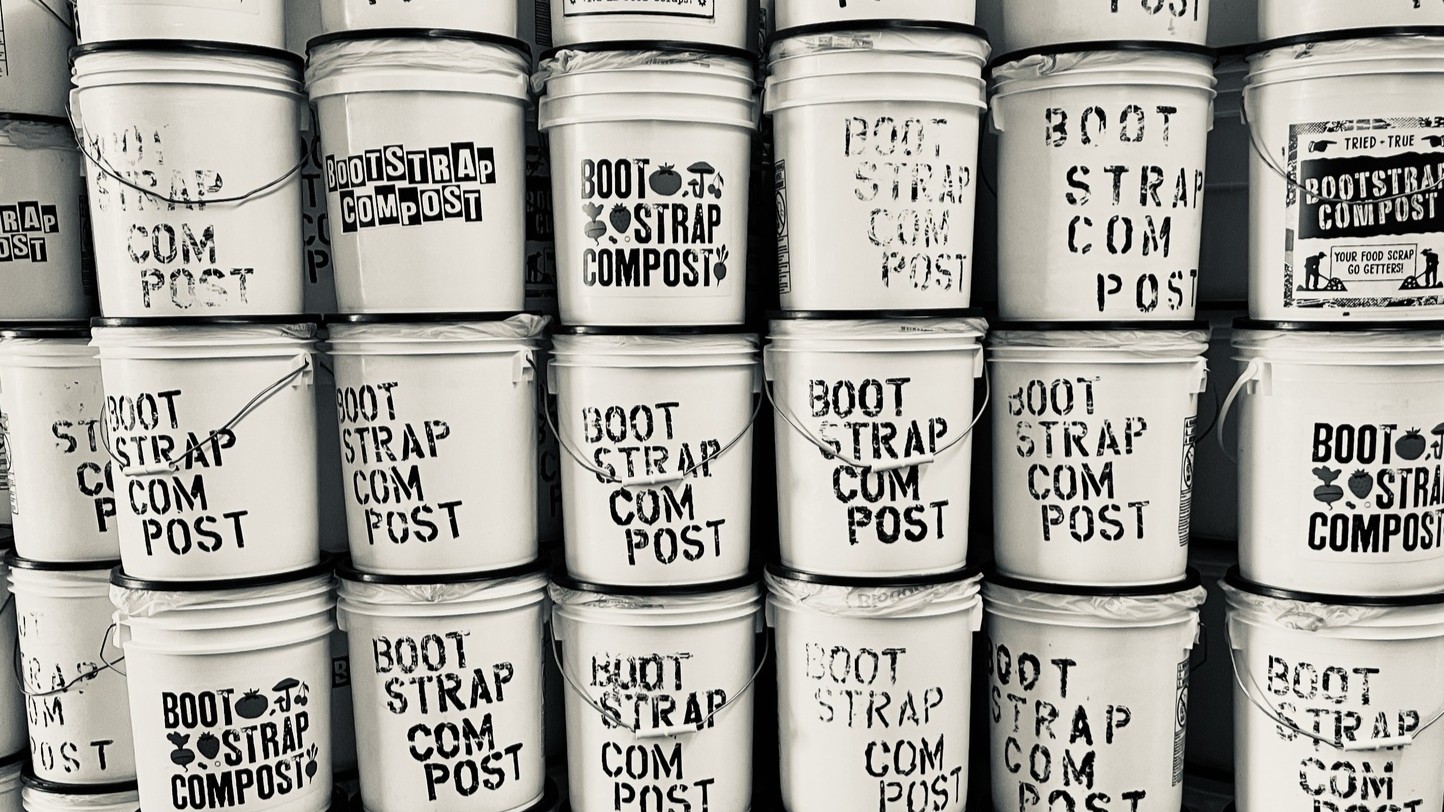
Bootstrap Compost is a composting company based in Boston, Massachusetts, United States. Founded in 2011, the company was created to address a growing environmental challenge in urban areas: how to manage food waste sustainably in cities where traditional composting is often difficult for residents and businesses.
Bootstrap Compost offers a convenient solution that allows households, restaurants, and institutions across the Greater Boston area to participate in composting. The company provides customers with food scrap collection buckets, which are filled throughout the week and then collected during scheduled pick-ups. These organic materials are processed and converted into nutrient-rich compost that can be returned to customers for use in their gardens, creating a circular system that transforms waste into a valuable resource.
Over the years, Bootstrap Compost has built a strong reputation for making composting simple and accessible while helping communities reduce the amount of organic waste sent to landfill.
Making Composting Accessible for Everyone
Bootstrap Compost’s mission is centred on reducing food waste and promoting sustainable living throughout the Boston region. In densely populated urban environments, composting can be challenging due to limited space and infrastructure. Bootstrap addresses this challenge by providing an easy-to-use collection service that allows individuals and businesses to divert their organic waste without needing their own composting systems.
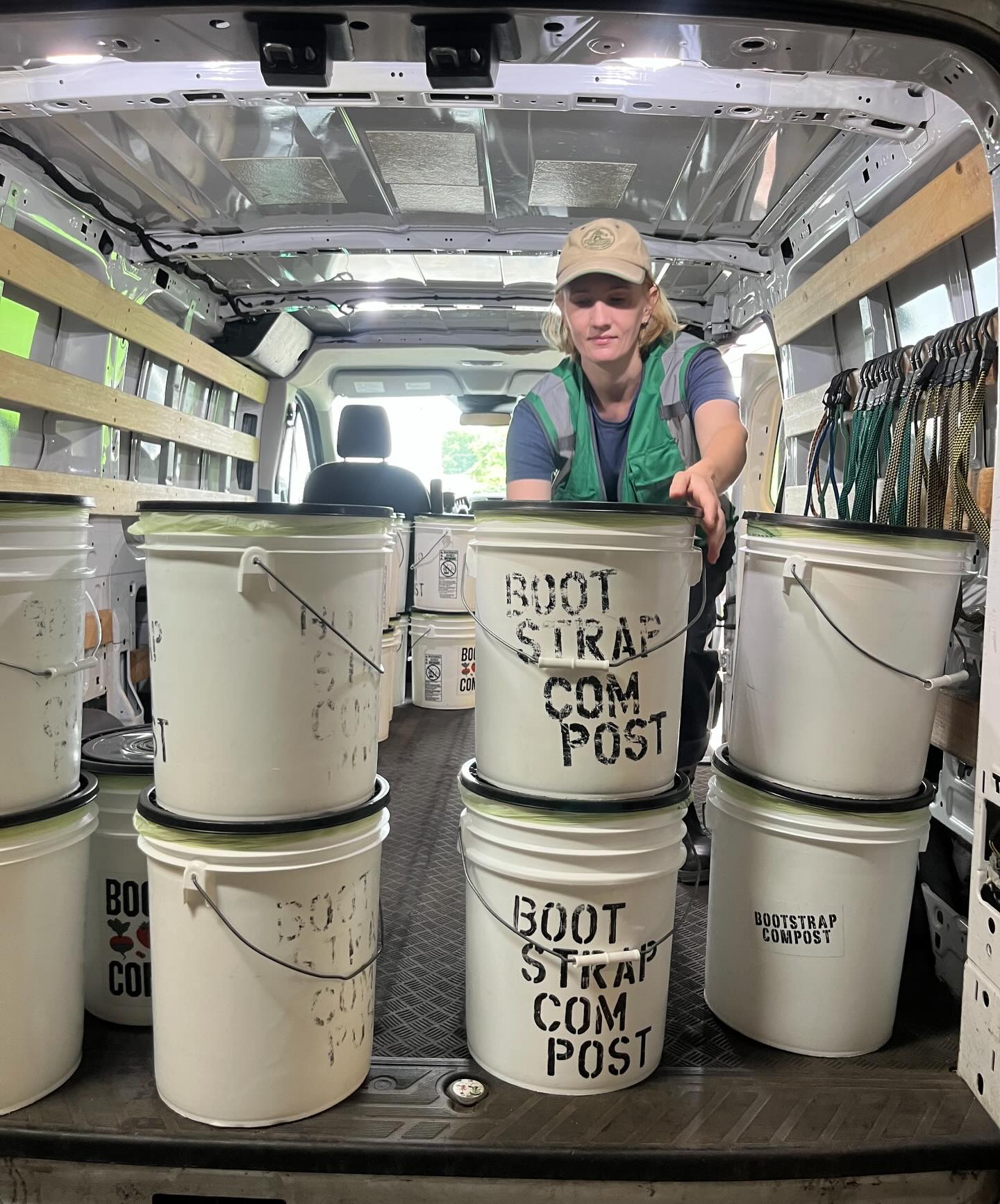
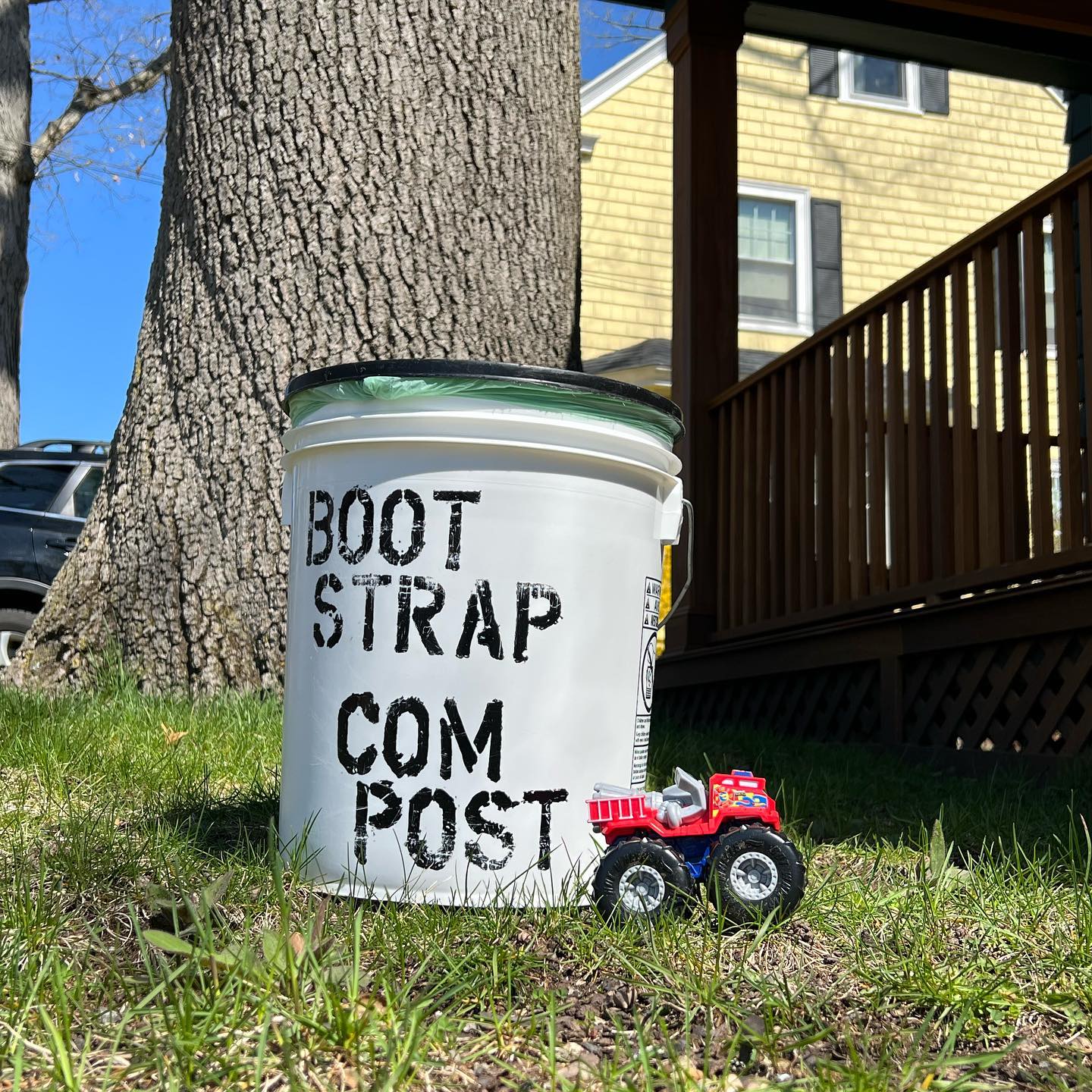
Customers begin their composting journey when Bootstrap delivers a five-gallon food scrap bucket, which is used to collect organic waste such as fruit and vegetable scraps, coffee grounds, eggshells, and other biodegradable materials. Each week or every two weeks, the filled bucket is collected and replaced with a clean one, ensuring a hygienic and convenient process.
The collected organic waste is then transported to composting facilities and local farms, where it is processed into nutrient-rich soil that can be used to support agriculture and gardening. This service not only reduces landfill waste but also helps return valuable nutrients to the soil, promoting a circular approach to food systems.
Bootstrap Compost also works closely with local businesses and institutions, including restaurants, cafes, and corporate workplaces, helping them implement effective food waste diversion programmes.
Expanding Capacity with the Harp CX10 Biodigester
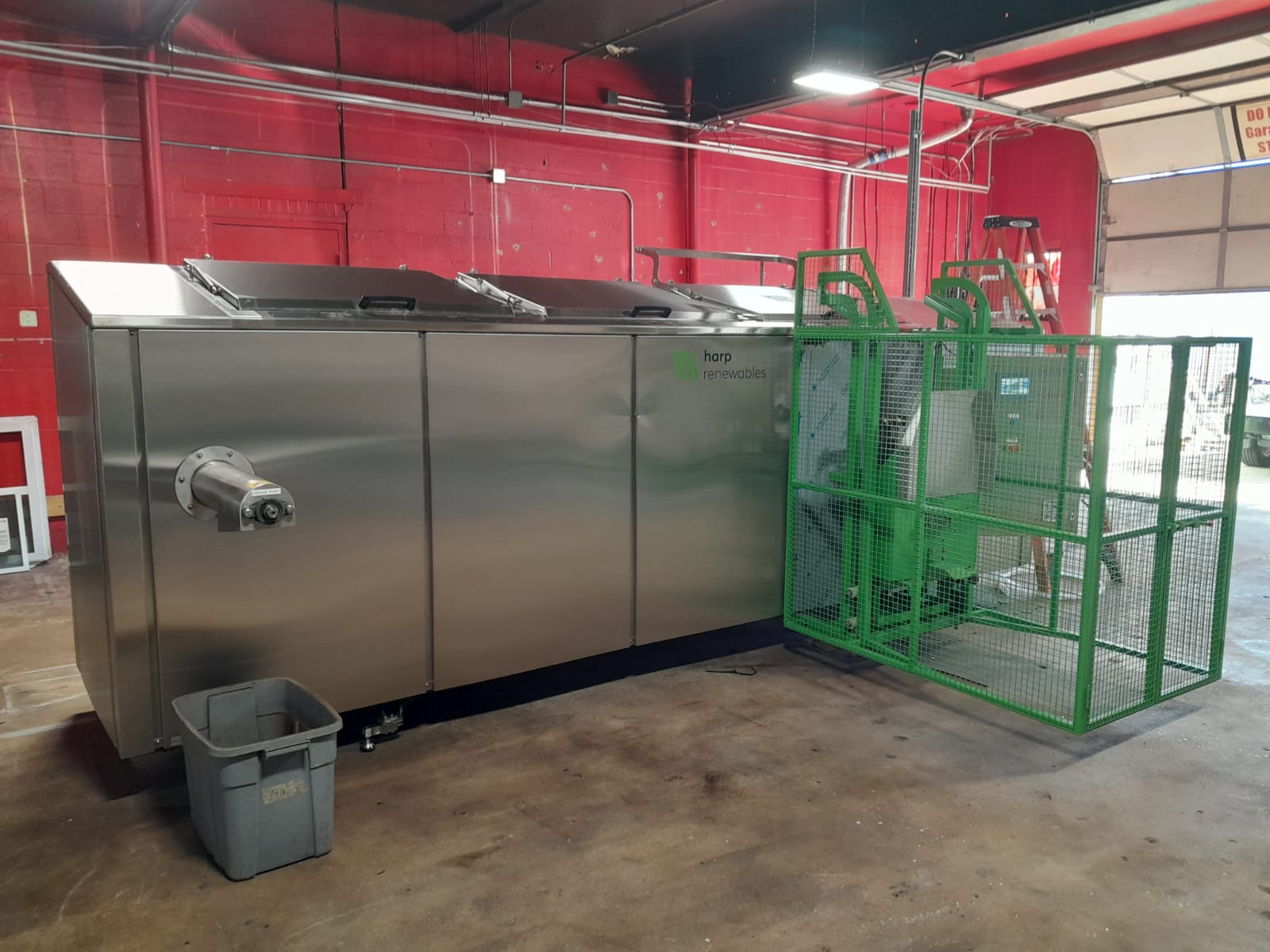
As demand for composting services continued to grow across Boston, Bootstrap Compost sought ways to expand its capacity for processing organic waste while maintaining efficiency and environmental performance. To support this goal, the company partnered with Harp Renewables to install the Harp CX10 Biodigester.
The CX10 is an advanced aerobic food waste processor designed to handle significant volumes of organic waste directly on-site. Capable of processing up to 10,000 litres of organic waste each week, the machine rapidly converts food scraps into a stabilised, nutrient-rich fertiliser-like output in less than 24 hours.
The system operates through aerobic digestion, a process in which organic material is broken down in the presence of oxygen. Within the biodigester, aerobic enzymes and microorganisms accelerate the decomposition of food waste, transforming complex organic materials into simpler compounds that resemble compost.
Specifications
- Equipment: Harp CX10 with built-in bin lifter
- Waste Stream: Household waste, business canteen waste etc.
- Capacity: 1428 Litres/Day, 10,000 Litres/Week, 520,000 Litres/Year
- Estimated CO2 Savings: -5 KgCO2eq (- 9.3Tonnes CO2eq)
The machine is fully automated, allowing Bootstrap Compost to process waste efficiently with minimal manual intervention. Sensors continuously monitor temperature, pH levels, and other critical parameters to ensure optimal digestion conditions. The unit is also equipped with a built-in bin lifter, making it easier and safer for operators to load organic waste while reducing manual handling.
Supporting a Circular Waste System
The installation of the Harp CX10 biodigester required careful coordination between Bootstrap Compost and the Harp Renewables engineering team. Once installed, the machine quickly became an important part of Bootstrap’s waste processing infrastructure.

Food scraps collected from households and businesses across Boston can now be processed more efficiently, reducing the time and logistics required to transport organic waste to external facilities. Within a single day, the biodigester transforms organic waste into a soil-like by-product that can be used as a fertiliser or soil conditioner.
This output supports Bootstrap’s core mission of closing the loop on food waste. Rather than sending organic material to landfill, where it would decompose and release methane emissions, the waste is converted into a useful product that helps improve soil health and agricultural productivity.
Bootstrap Compost continues to return finished compost to many of its customers, allowing residents to use the nutrient-rich soil in their own gardens. This approach strengthens the connection between food consumption, waste management, and soil regeneration.
Environmental Impact and Community Benefits
By incorporating the Harp CX10 biodigester into its operations, Bootstrap Compost has further strengthened its ability to reduce landfill waste across the Greater Boston area. Organic waste that would otherwise contribute to greenhouse gas emissions is instead transformed into a valuable agricultural resource.
The system also enables Bootstrap to scale its services for both residential customers and commercial clients. Restaurants, cafes, cafeterias, and corporate workplaces can now divert their food scraps through Bootstrap’s collection programmes, significantly lowering the environmental impact of their operations.
In addition to waste diversion, Bootstrap Compost actively promotes education and community engagement around composting. By helping individuals understand the environmental benefits of recycling organic waste, the company encourages more people to participate in sustainable waste practices.
A Growing Model for Urban Sustainability
Bootstrap Compost’s partnership with Harp Renewables demonstrates how technology can help cities tackle one of their most pressing environmental challenges: food waste. By combining community-based collection services with advanced waste processing systems, Bootstrap has created a scalable model for urban composting.
Through initiatives like these, Bootstrap Compost continues to transform food scraps into valuable resources while helping communities across Boston move toward a more sustainable and circular future.


0 Comments