

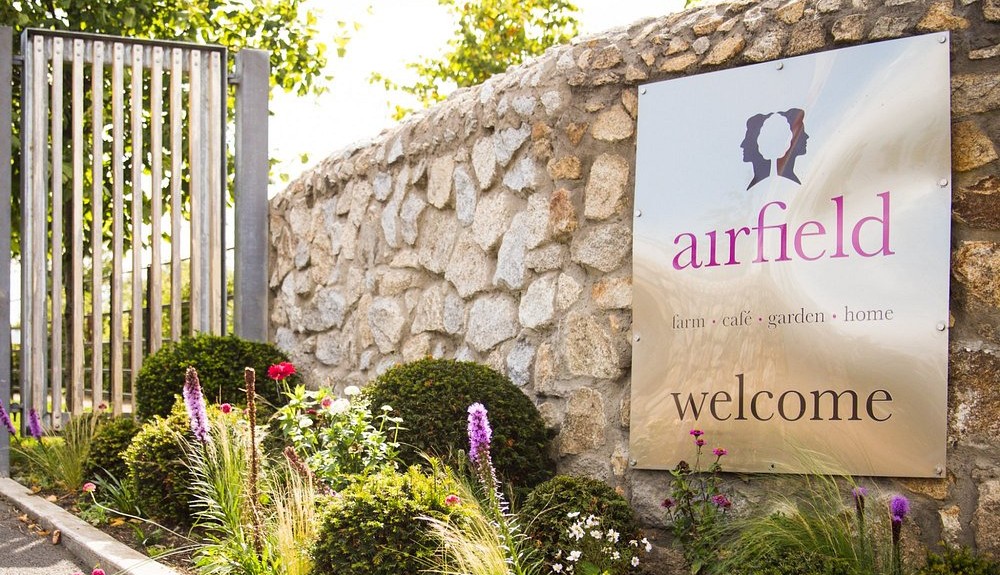
Set within 38 acres in Dundrum, Dublin, Airfield Estate is far more than a farm—it is a living, breathing example of how food systems, education, and sustainability can coexist in a modern urban setting.
Established in 1974 by the Overend family as a charitable trust, the estate has evolved into a unique destination where visitors don’t just learn about sustainability—they experience it firsthand. From its working farm and market garden to its café and educational programmes, every element of Airfield is intentionally connected. Food grown on-site is served on-site, waste is managed on-site, and knowledge is shared openly with the community.
This level of integration brings both opportunity and responsibility. Operating a farm, café, and visitor destination in one location creates a closed ecosystem—but also demands that every output, including waste, is handled in a way that reflects the estate’s values.
The Challenge: Closing the Loop in a Working Estate
Airfield Estate already operated with a strong sustainability ethos—organic farming, seasonal production, biodiversity protection, and renewable energy all formed part of its daily operations. However, like many estates combining food production and hospitality, organic waste remained a persistent challenge.
Food preparation in the café, combined with farm and garden waste, generated a steady stream of organic material. While composting practices were already in place, the estate sought a more efficient, scalable, and consistent solution—one that could keep pace with visitor numbers, improve operational control, and strengthen its role as a demonstrator of best practice.
For Airfield, the goal wasn’t simply waste reduction. It was about creating a visible, closed-loop system that could support farming operations while also serving as an educational tool.
Integrating Technology into a Circular Farm System
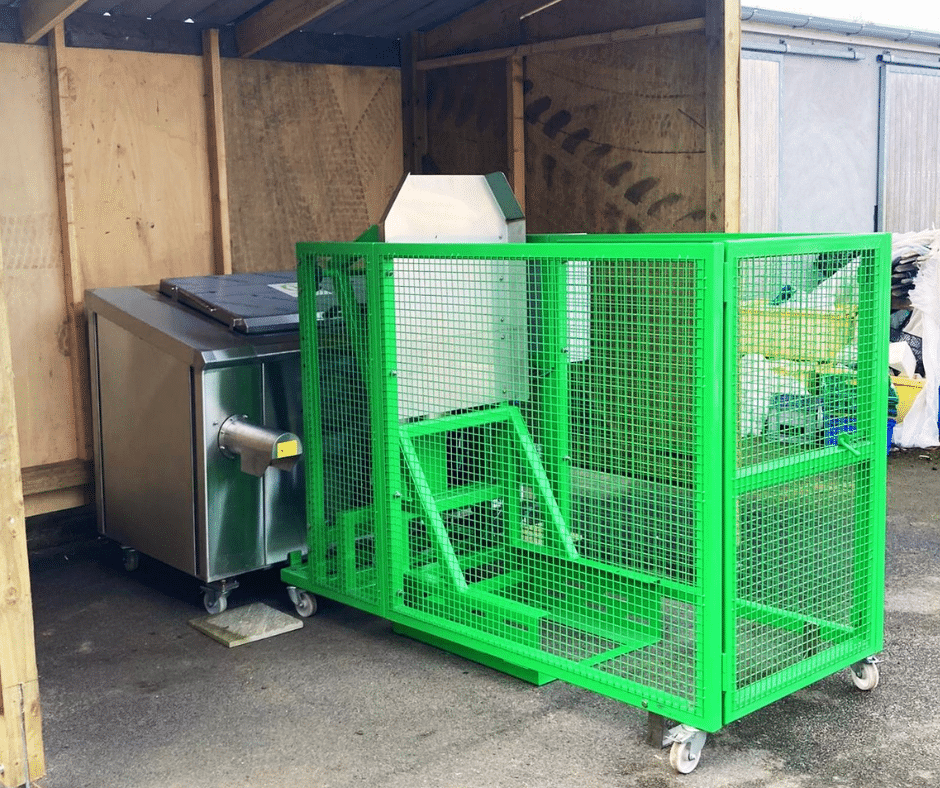
To achieve this, Airfield Estate partnered with Harp Renewables to install the Harp CX2 Biodigester, an on-site aerobic food waste processor designed for small-to-medium scale operations.
With the capacity to process up to 2,000 litres of organic waste per week, the CX2 converts food waste into a nutrient-rich soil enhancer in under 24 hours. Its fully automated system continuously monitors key conditions such as temperature and pH, ensuring optimal performance without requiring constant manual oversight.
The inclusion of a built-in bin lifter also simplifies daily operations, allowing staff to manage waste efficiently and safely without disrupting kitchen or farm workflows.
Specifications
• Equipment: Harp CX2 with a built-in bin lifter
• Waste Stream: Restaurant Waste
• Capacity: 285 Litres/Day, 2000 Litres/Week, 104,000 Litres/Year
• Estimated CO2 Savings: -1497.2 KgCO2eq (- 1.5 Tonnes CO2eq)
At Airfield, the CX2 is not hidden behind the scenes—it forms part of the estate’s wider sustainability story. It represents a tangible, working example of how technology can support circular agriculture in a real-world setting.
From Waste to Resource: Strengthening the Estate Ecosystem
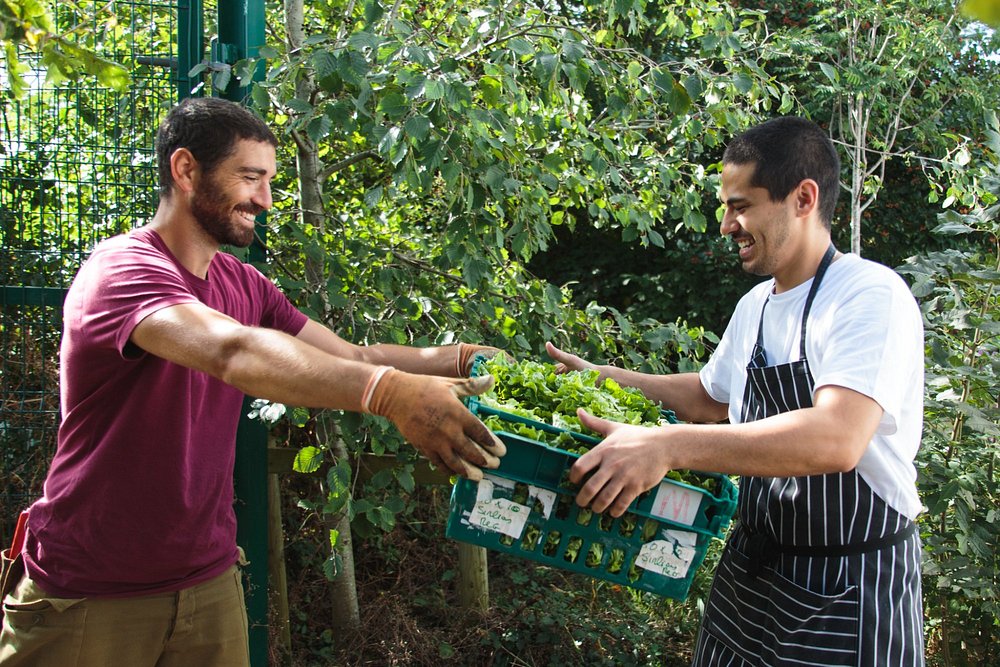
The real impact of the CX2 lies in how seamlessly it integrates into Airfield’s existing ecosystem. Organic waste from the café and food preparation areas is processed on-site and returned to the land as a soil-enhancing product.
This closes a critical loop. Food grown on the estate is consumed by visitors, the resulting waste is processed, and the output is used to enrich the same soil that produces future crops.
For a farm committed to organic and regenerative principles, this is a powerful shift. It reduces reliance on external inputs, supports soil health, and reinforces the estate’s commitment to natural growing methods.
Financial and Operational Value
While sustainability is central to Airfield’s mission, operational efficiency is equally important. The CX2 has helped reduce the volume of waste requiring external collection, lowering disposal costs and decreasing reliance on third-party services.
At the same time, the consistency and speed of on-site processing provide greater control over waste management. There is no backlog, no variability in composting timelines, and no dependency on external infrastructure.
This reliability is particularly valuable in a high-traffic environment where visitor numbers—and therefore waste volumes—can fluctuate. The system ensures that operations remain smooth, regardless of demand.
Enhancing the Visitor Experience Through Transparency
What sets Airfield apart is its role as an educational destination. Thousands of visitors, including students, families, and industry professionals, pass through the estate each year.
The integration of the CX2 adds a new dimension to this experience. Sustainability is no longer an abstract concept—it is something visitors can see in action. The journey from food to waste to soil becomes visible, understandable, and tangible.
This transparency strengthens Airfield’s educational offering, reinforcing its position as a leader in sustainability education. It also aligns with growing public interest in where food comes from and what happens after it is consumed.
A Model for Sustainable Estates and Agritourism
Airfield Estate demonstrates that sustainability is most powerful when it is fully integrated—when farming, food, education, and operations all work together as part of a single system.
The addition of the Harp CX2 doesn’t just solve a waste problem; it strengthens the estate’s identity as a living model of circular agriculture. For other estates, farms, and hospitality venues, it offers a clear example of how the right technology can enhance both sustainability and storytelling.
In a world where consumers increasingly value transparency and responsibility, Airfield shows that sustainability is not just something you do—it’s something you can share, demonstrate, and build an experience around.


0 Comments